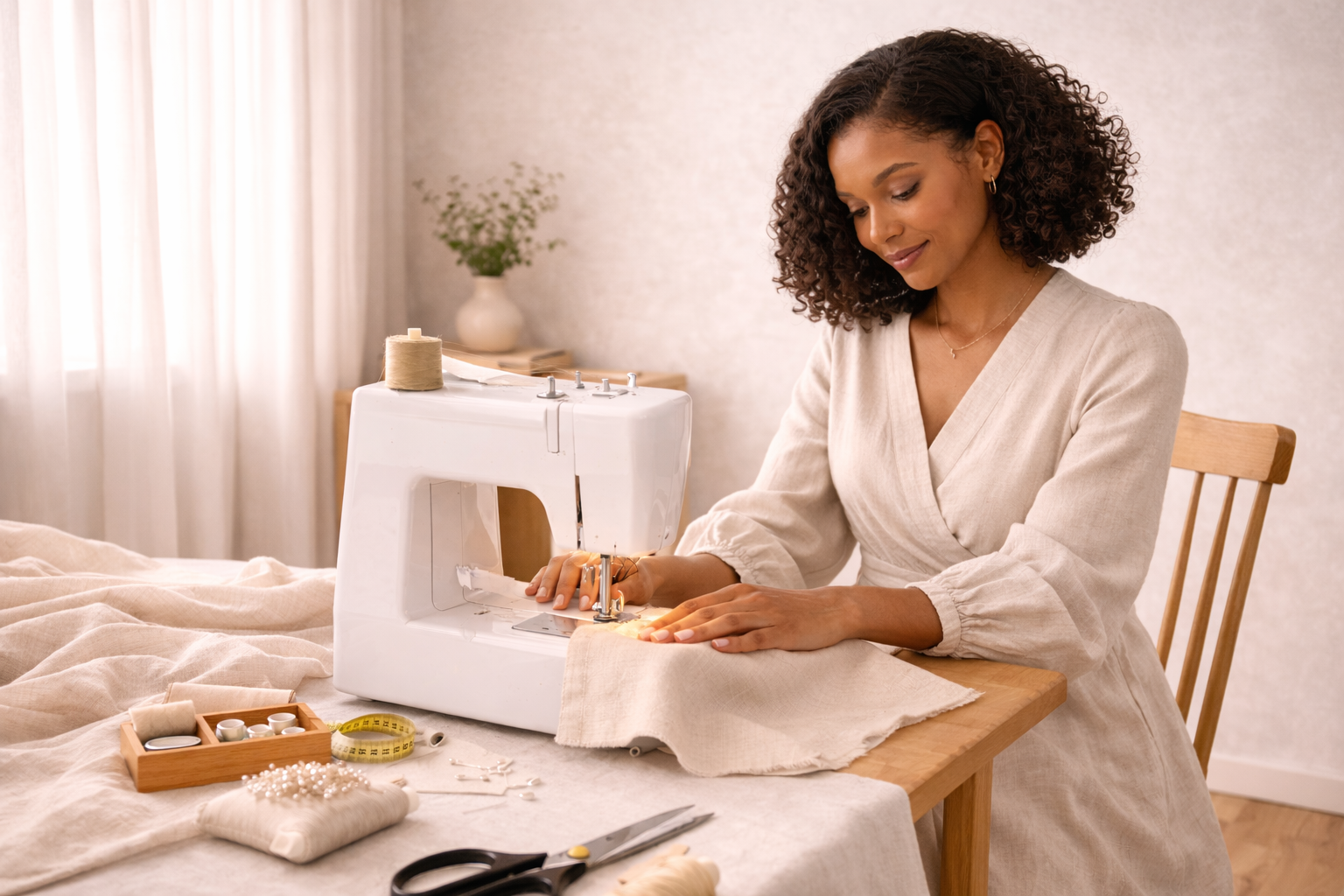
Setting up your sewing space doesn’t have to be complicated—or expensive.
Whether you’re working with a full room or just a small corner, the right setup can make sewing easier, more enjoyable, and far more productive.
The goal isn’t perfection—it’s creating a space that works for you.
What You Actually Need to Start
You don’t need a full studio to begin. Start with the essentials:
- A stable table or desk
- A reliable sewing machine
- Basic sewing tools
- Good lighting
👉 Recommended setup tools: Shop beginner sewing machine
👉 Essentials kit: Shop dressmaking kit
Pro Tip: Start simple. You can always upgrade your space later.
Choosing the Right Location
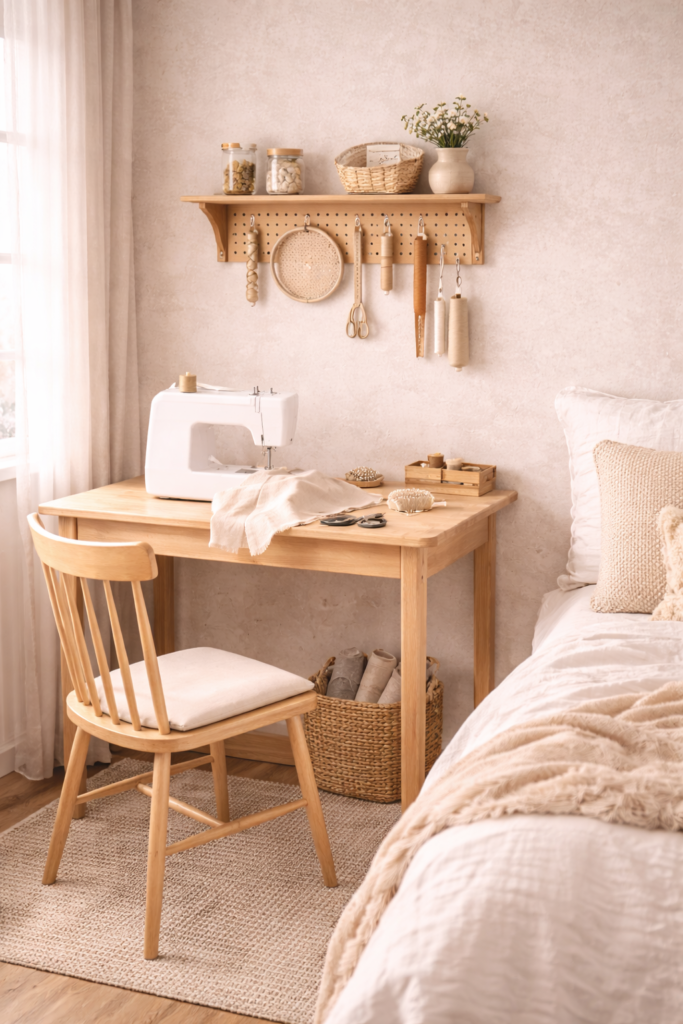
Your sewing space should feel comfortable and distraction-free.
- Choose a quiet corner if possible
- Use natural light when available
- Avoid cramped or cluttered areas
Tip: Even a small corner of your room can become a functional sewing area with the right setup.
Small Space Sewing Setup Tips
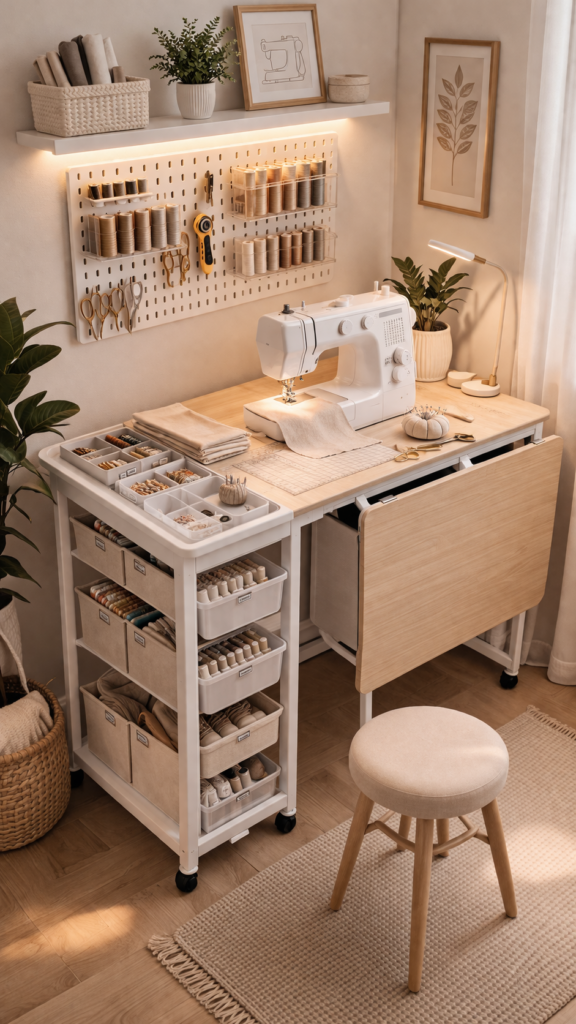
If you don’t have a dedicated room, don’t worry—you can still create an effective setup.
- Use a foldable table
- Store tools in bins or drawers
- Keep only what you use daily nearby
Pro Tip: Vertical storage (shelves, wall hooks) saves space and keeps everything within reach.
Lighting Matters More Than You Think
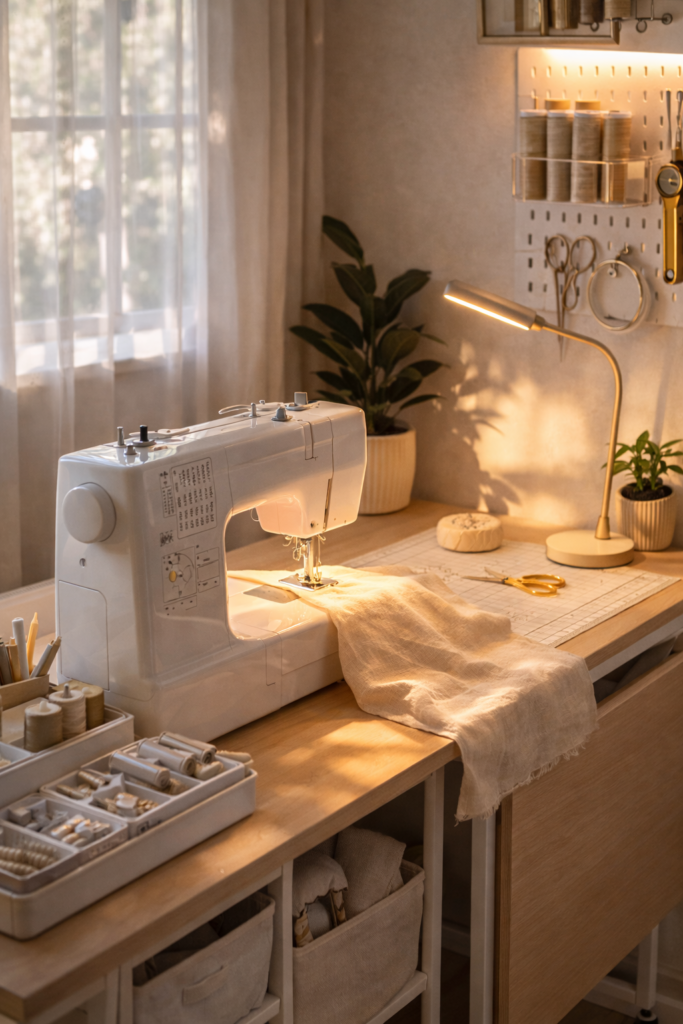
Good lighting can dramatically improve your sewing accuracy.
- Use natural light during the day
- Add a desk lamp for detail work
- Avoid shadows over your sewing area
Tip: Position your light source from the side—not directly behind you.
Organizing Your Sewing Tools
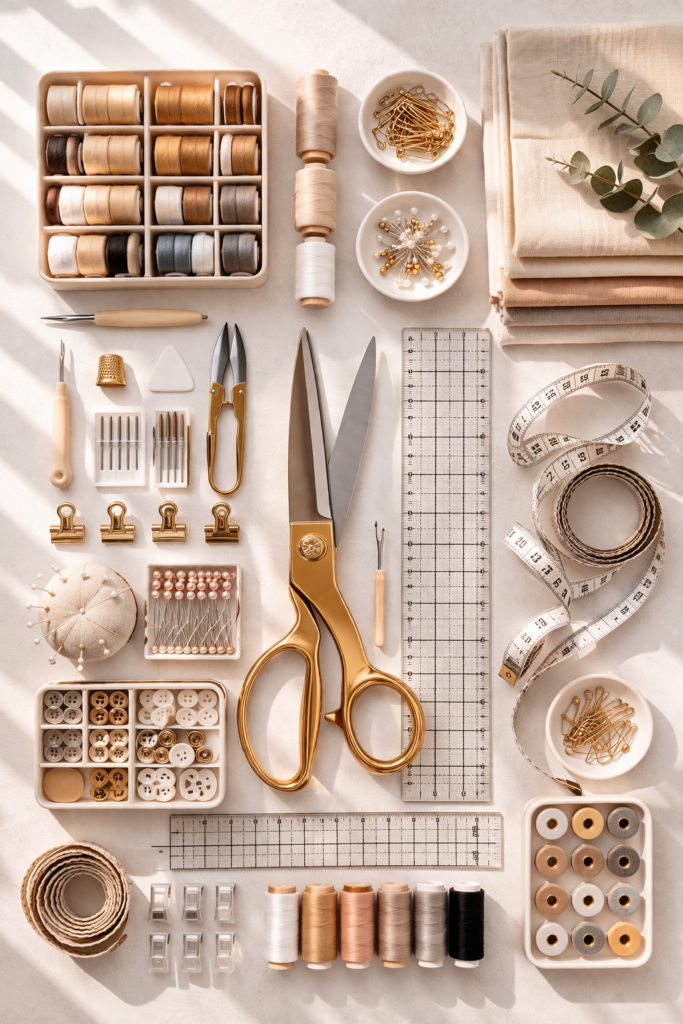
An organized space makes sewing faster and less stressful.
- Keep scissors, pins, and tape within reach
- Use small containers for tools
- Store fabric separately to avoid clutter
Pro Tip: Assign a place for every tool—this saves time and reduces frustration.
Fabric Storage Tips
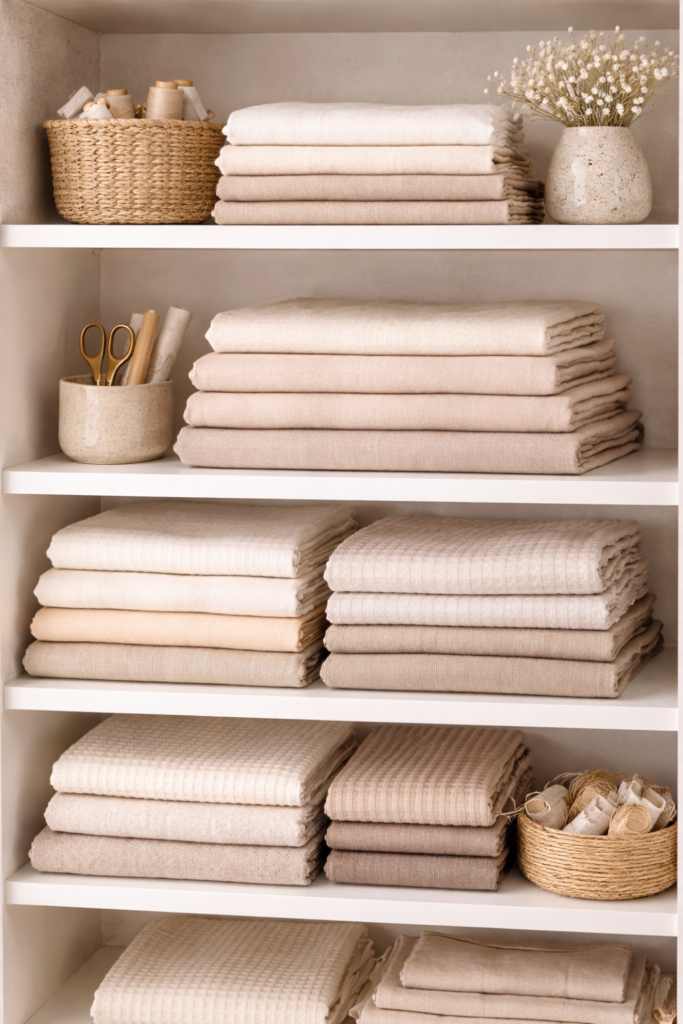
Fabric can quickly become overwhelming if not stored properly.
- Fold fabric neatly
- Store by type or color
- Avoid stacking too high
👉 Explore beginner-friendly fabrics: Shop fabric options
Tip: Keep your current project fabric separate from the rest.
Common Setup Mistakes to Avoid
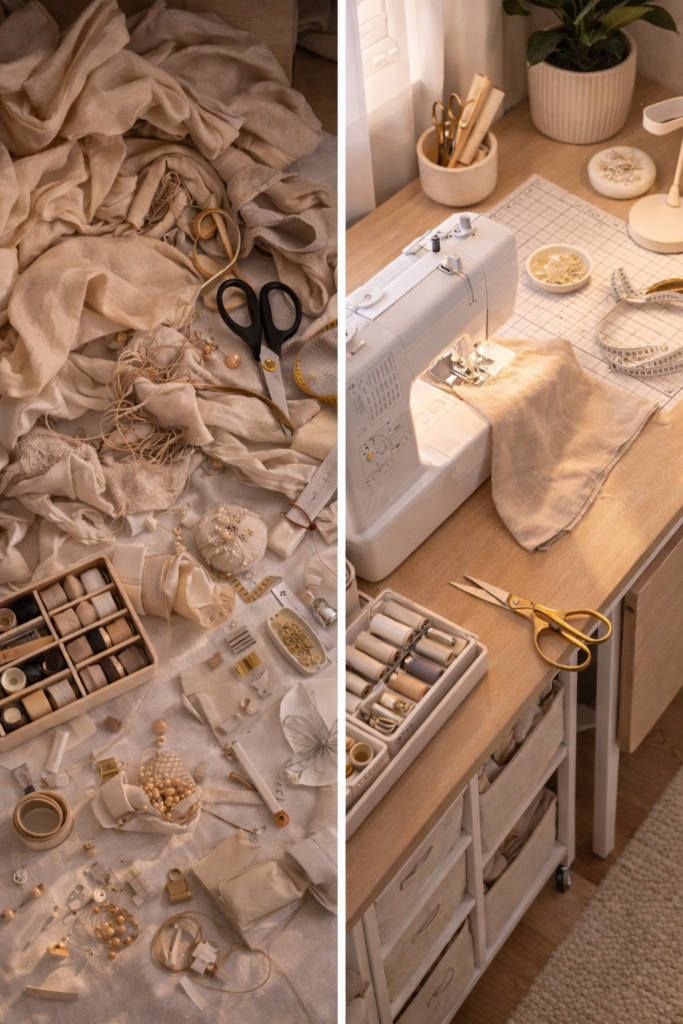
Overcrowding your space
Too many tools make it harder to focus.
Poor lighting
This leads to mistakes and eye strain.
Unstable table
This affects stitch quality and control.
No organization system
Wasting time searching for tools slows your progress.
Small Habits That Improve Your Setup
- Clean your space after each session
- Prepare tools before starting
- Keep your workspace clear while sewing
- Organize materials before cutting
These habits create a smoother, more enjoyable sewing experience.
Final Thoughts
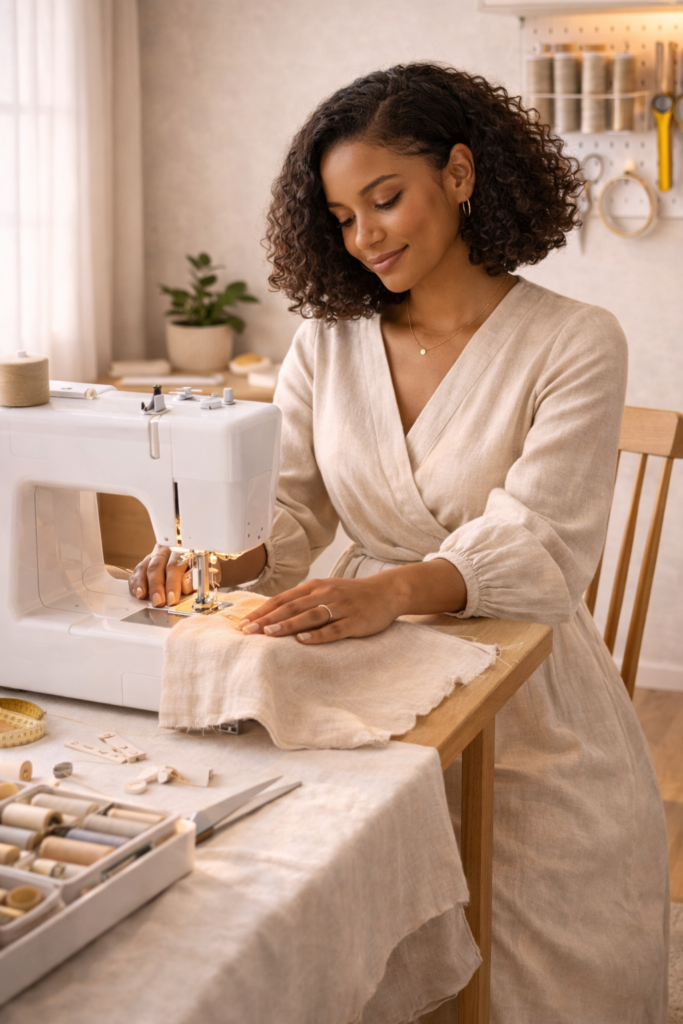
Your sewing space doesn’t need to be perfect—it just needs to work for you.
Start with the basics, stay organized, and build your setup over time.
The more comfortable your space feels, the more confident you’ll become in your sewing.
Affiliate Disclosure: This post may contain affiliate links. If you purchase through these links, we may earn a small commission at no extra cost to you.
Leave a Reply