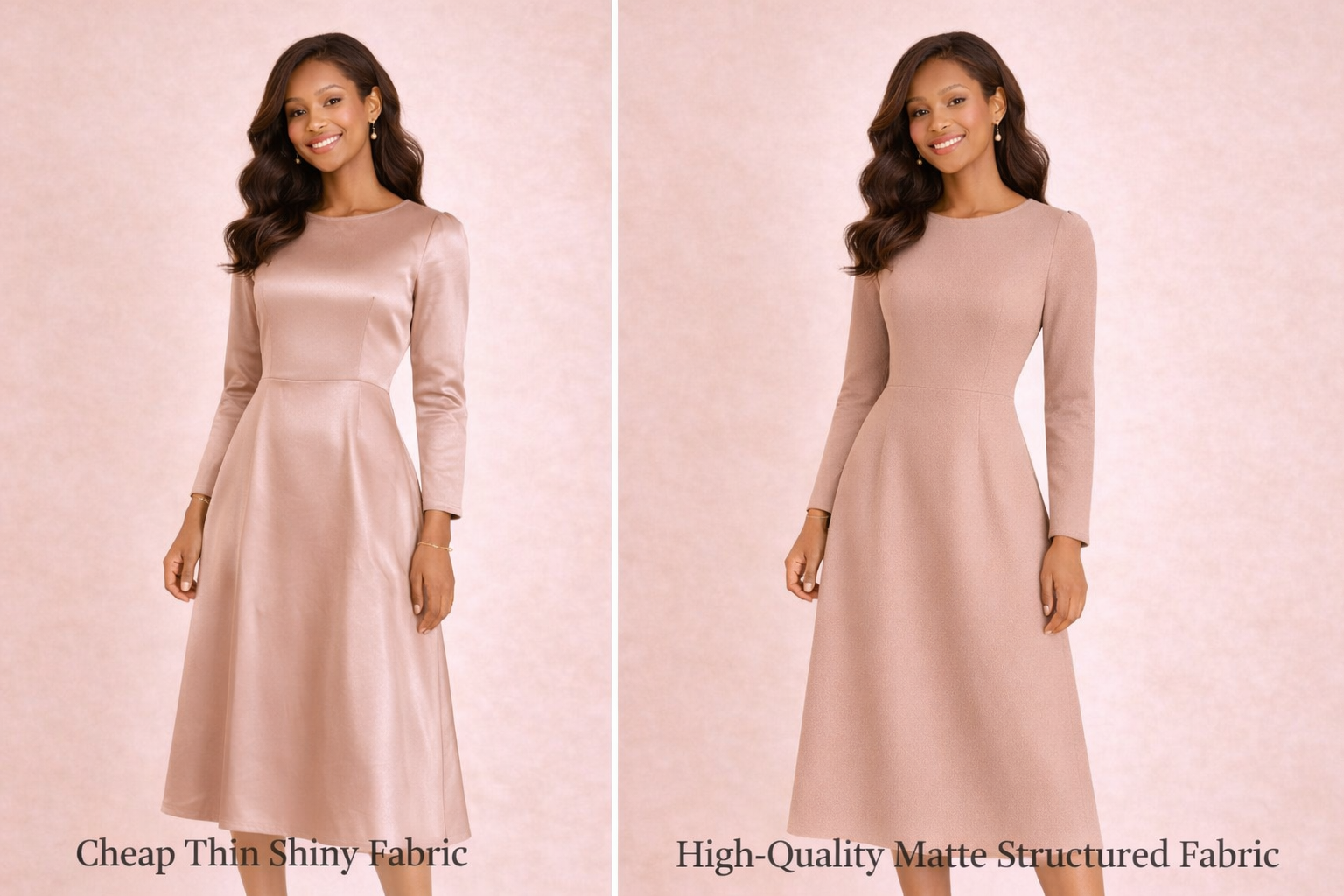
If your dresses don’t look as polished as you imagined, the issue may not be your sewing — it’s likely your fabric.
The truth is, even the simplest dress pattern can look expensive when made with the right material. On the other hand, the wrong fabric can make even a well-sewn garment look cheap.
This guide breaks down the best fabrics for modest dresses, what makes them look high-end, and how to choose the right one — even as a beginner.
What Makes a Fabric Look Expensive?
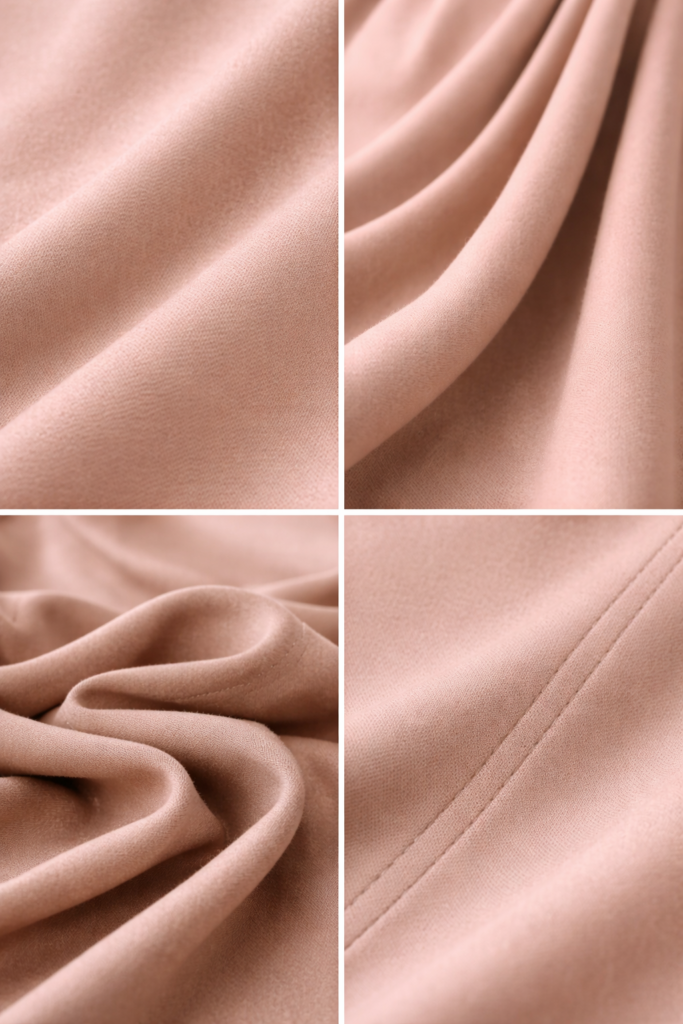
Before choosing fabric, it’s important to understand what creates that elevated look.
High-end fabrics typically have:
- A structured but flexible drape
- A matte or soft finish (not overly shiny)
- Enough weight to hold shape
- Smooth texture with minimal pilling
Key principle:
Structure + softness = expensive look
1. Linen (and Linen Blends)
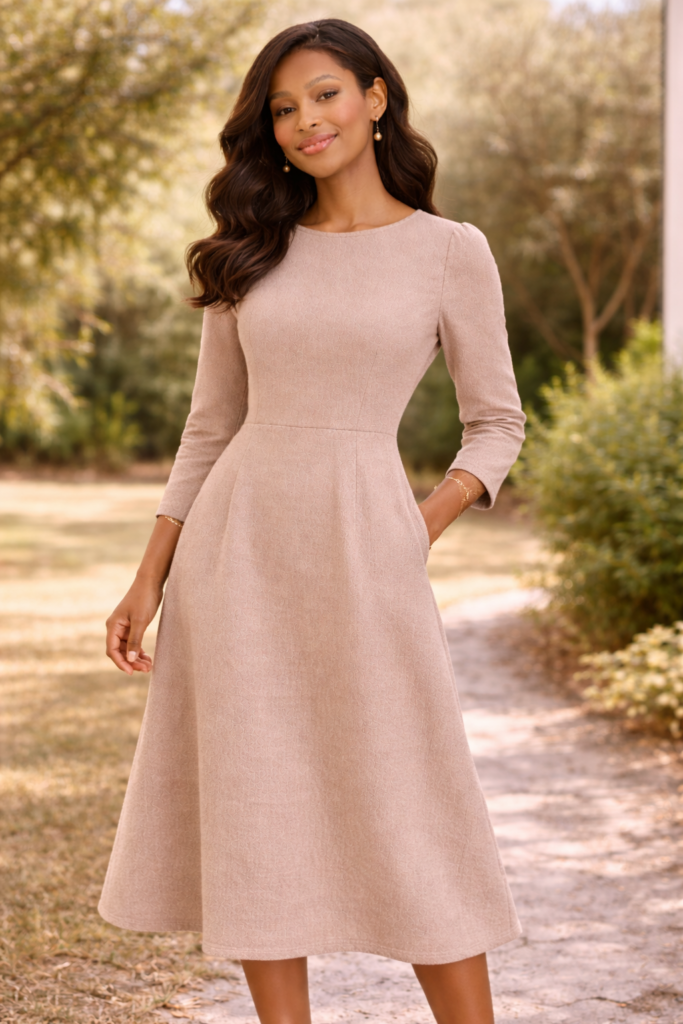
Linen is one of the most reliable fabrics for achieving a clean, elevated aesthetic.
Why it works:
- Natural texture looks high-end
- Breathable and comfortable
- Holds shape while still flowing
Best for:
- A-line dresses
- Shirt dresses
- Minimalist silhouettes
Beginner tip:
Linen wrinkles easily — pressing is essential for a polished finish.
2. Cotton Twill
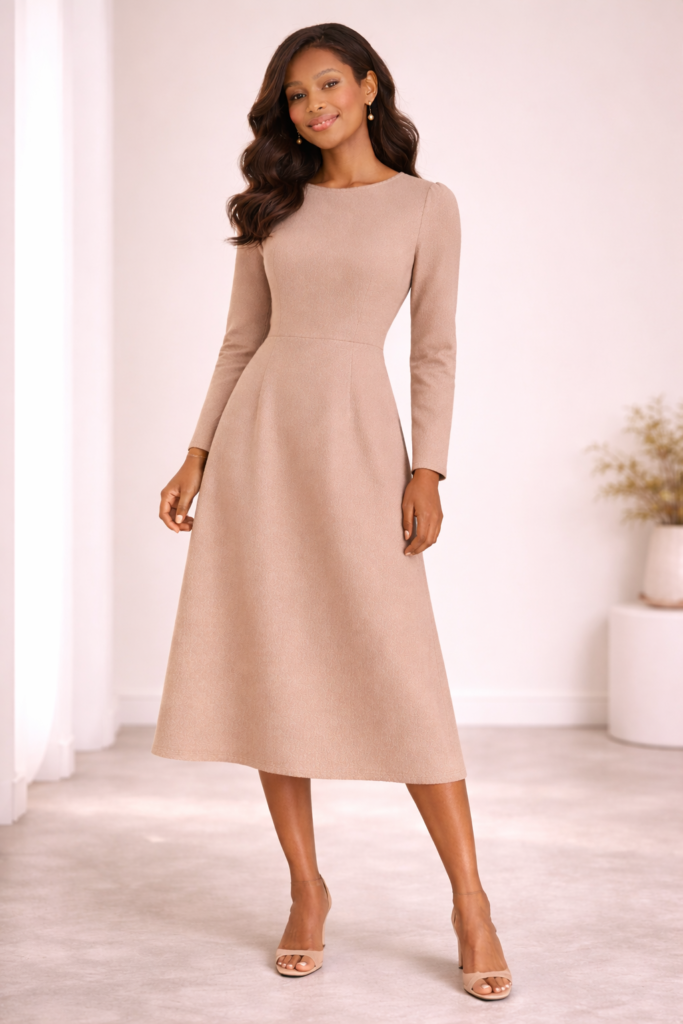
Cotton twill is a beginner-friendly fabric that instantly adds structure.
Why it works:
- Slight weight gives the dress shape
- Easy to sew and control
- Durable and forgiving
Best for:
- Structured midi dresses
- Shift dresses
- Everyday modest wear
3. Crepe (Soft & Structured)
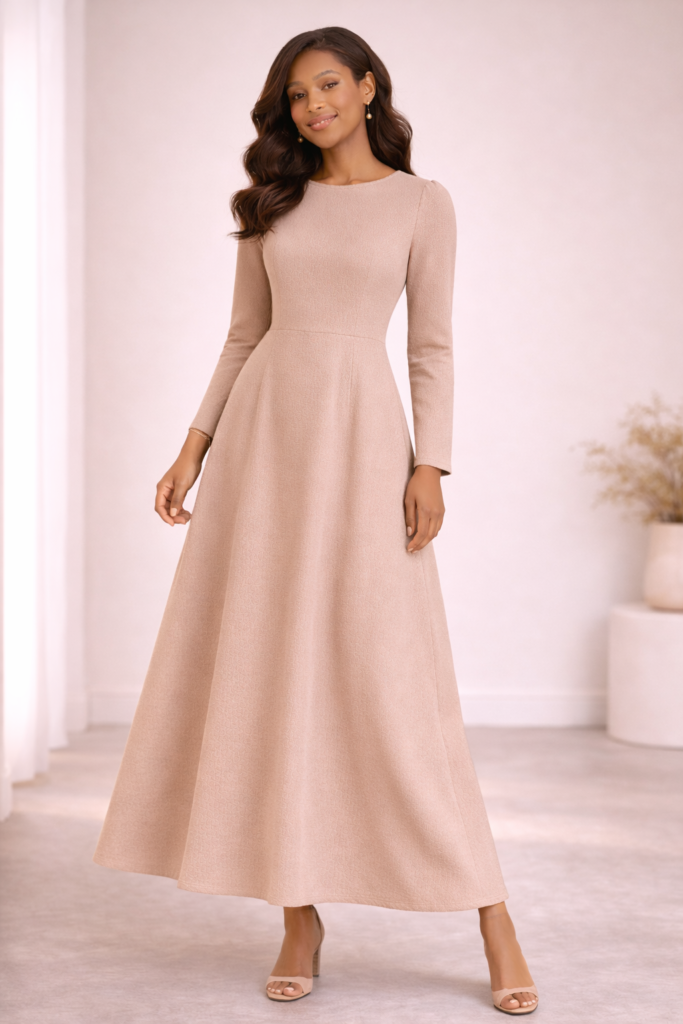
Crepe offers the perfect balance between softness and polish.
Why it works:
- Beautiful drape
- Subtle texture hides imperfections
- Looks refined without being stiff
Best for:
- Maxi dresses
- Empire waist styles
- Flowing modest designs
4. Rayon (For Movement)
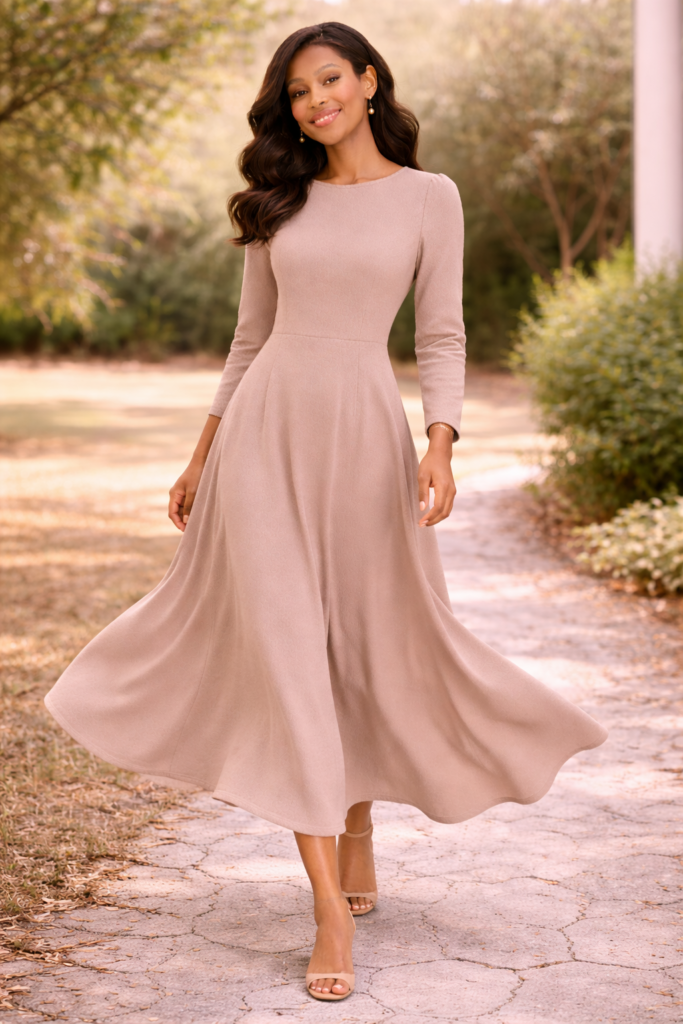
Rayon is ideal when you want fluid movement without sacrificing elegance.
Why it works:
- Drapes beautifully
- Feels soft and lightweight
- Creates a graceful silhouette
Best for:
- Tiered dresses
- Wrap-style dresses
- Relaxed modest looks
Beginner caution:
Rayon can be slippery — use pins and take your time.
5. Ponte Knit (Structured Stretch)
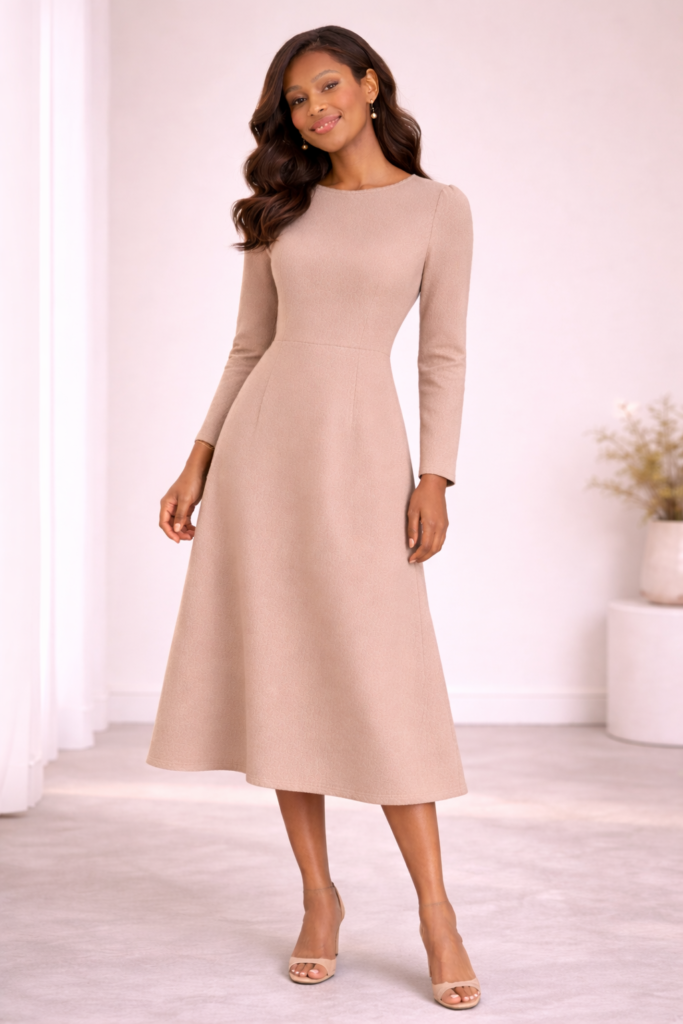
If you want comfort and structure, ponte knit is a strong choice.
Why it works:
- Thick and stable
- Doesn’t cling too much
- Easy to wear and move in
Best for:
- Fitted modest dresses
- Workwear styles
- Minimalist silhouettes
6. Poplin (Crisp and Clean)
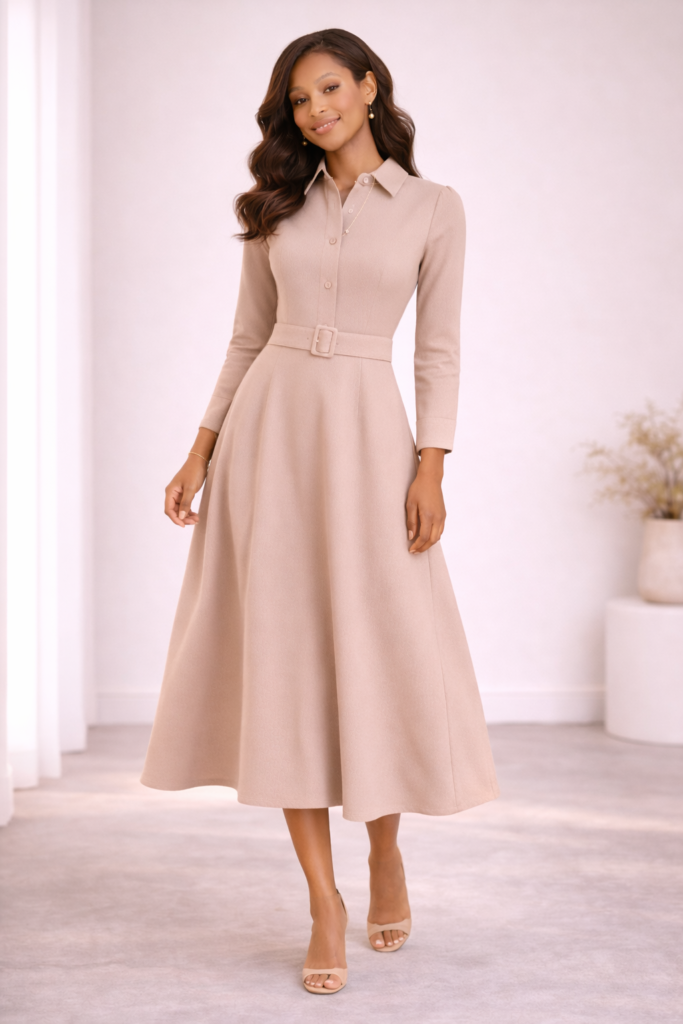
Poplin gives a sharp, polished look with minimal effort.
Why it works:
- Smooth surface
- Lightweight but structured
- Holds clean lines well
Best for:
- Shirt dresses
- Summer modest dresses
- Simple tailored looks
7. Double Gauze (Soft but Elevated)
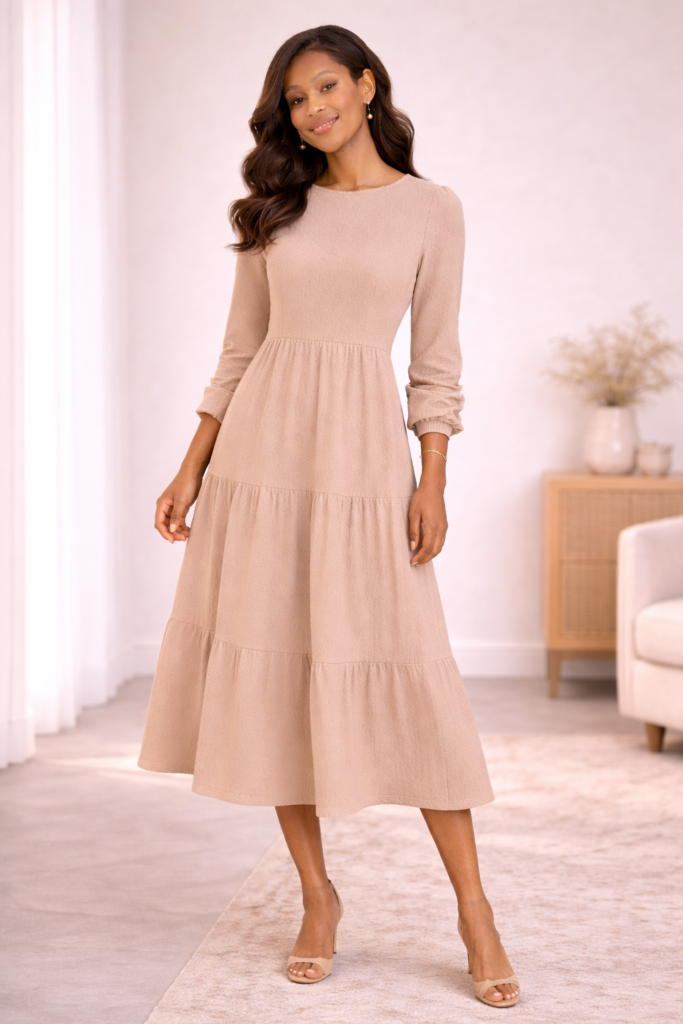
Double gauze is soft, breathable, and surprisingly elegant when styled correctly.
Why it works:
- Natural texture adds dimension
- Comfortable for everyday wear
- Works well in relaxed silhouettes
Best for:
- Casual modest dresses
- Tiered styles
- Loose-fitting designs
Fabrics to Avoid (If You Want a High-End Look)
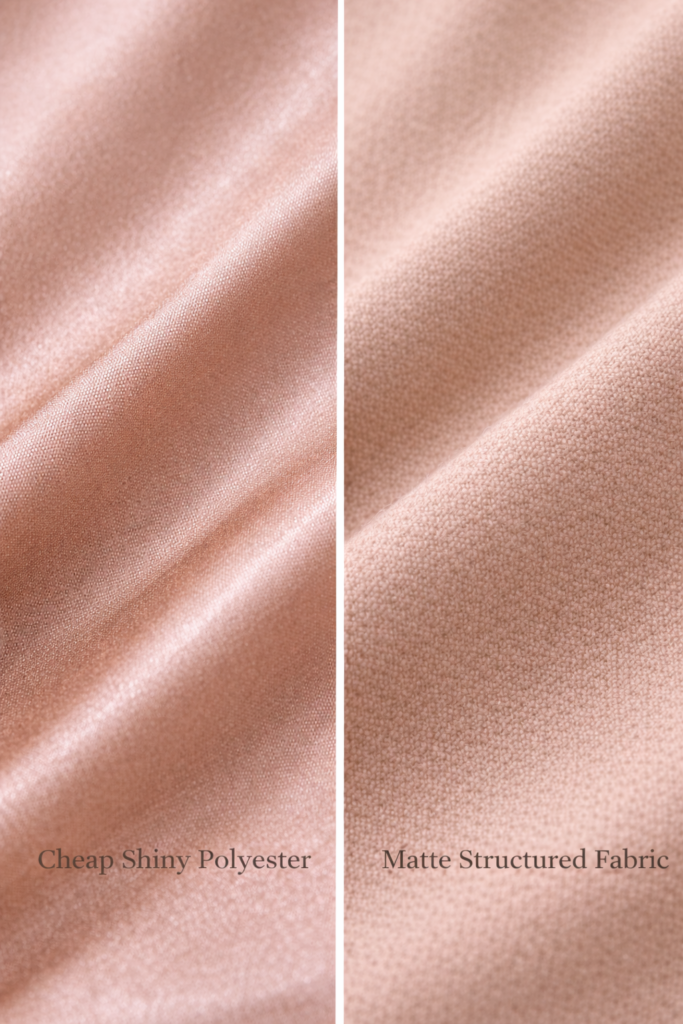
Some fabrics tend to make dresses look less polished, especially for beginners.
Avoid:
- Very thin, flimsy materials
- Overly shiny polyester
- Cheap stretch fabrics that cling
- Fabrics that wrinkle excessively without structure
These can make your dress look unfinished — even if your sewing is perfect.
How to Choose the Right Fabric for Your Dress
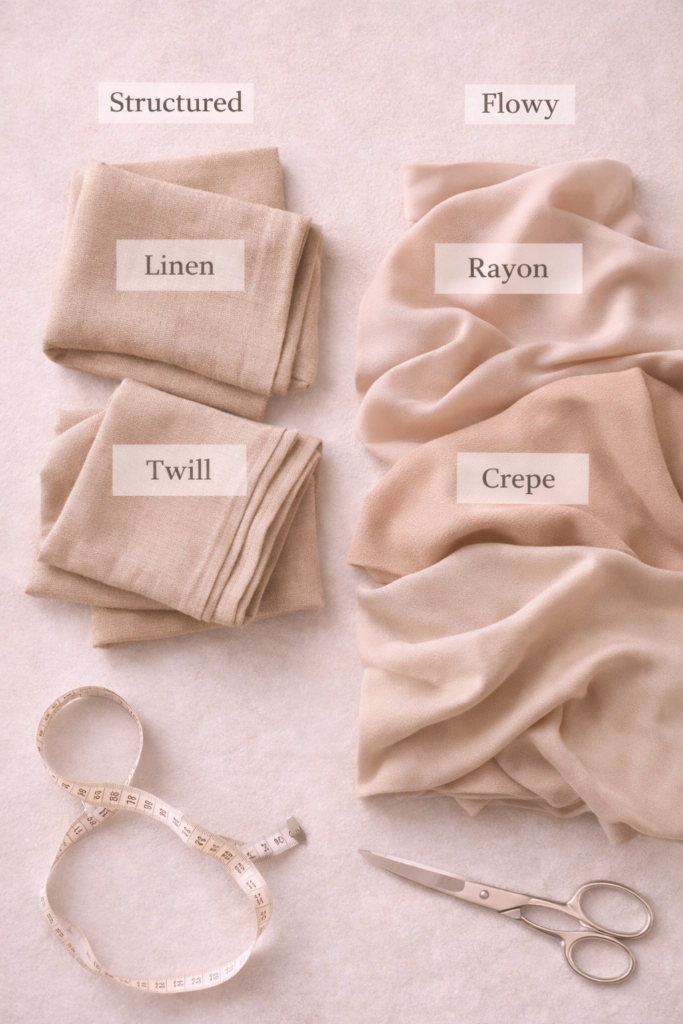
Use this simple framework:
For structure → cotton twill, ponte, poplin
For flow → rayon, crepe
For balance → linen blends
Ask yourself:
- Does this fabric hold shape?
- Does it drape well?
- Does it look matte or overly shiny?
Where to Buy Quality Fabric
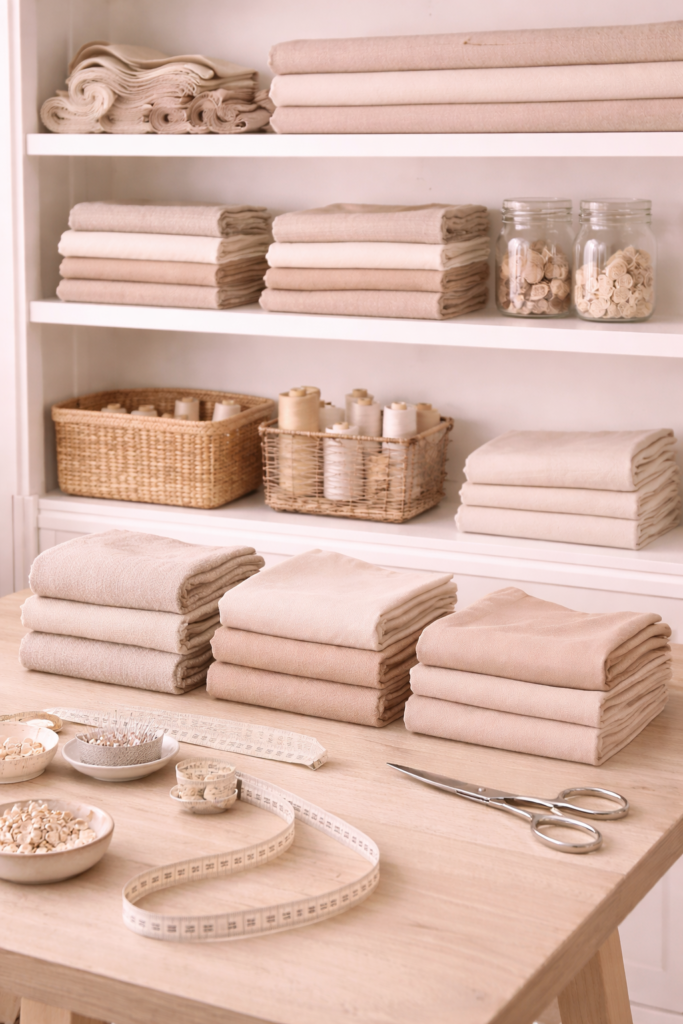
If you’re looking for reliable sources, retailers like Mood Fabrics and Joann offer a wide range of beginner-friendly options that still look elevated.
Focus on quality over quantity — one great fabric is better than several low-quality ones.
Common Fabric Mistakes Beginners Make
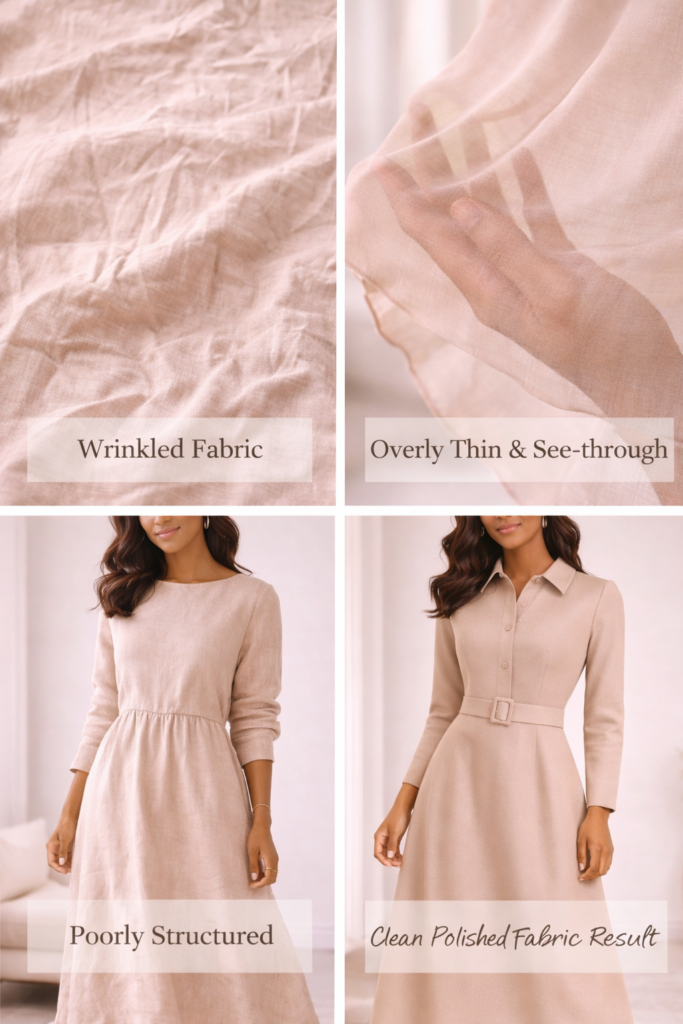
Avoid these to keep your dresses looking polished:
- Choosing fabric based only on price
- Ignoring weight and drape
- Using the wrong fabric for the pattern
- Skipping pre-washing
- Not testing fabric before sewing
Final Takeaway
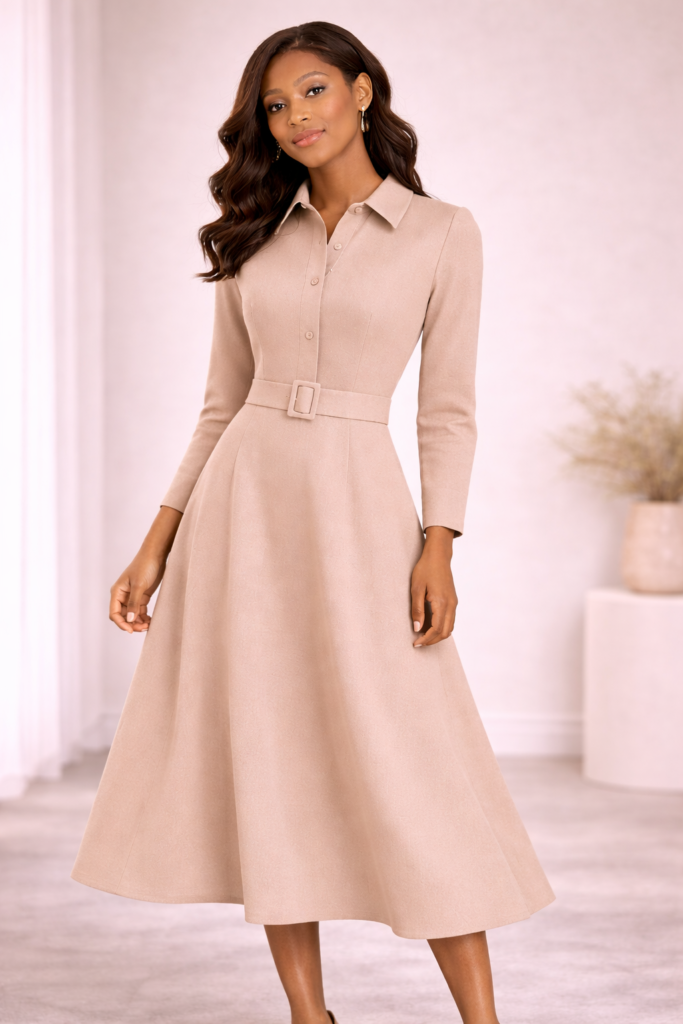
Fabric is the foundation of your dress. It determines how your garment looks, feels, and moves.
If you want your modest dresses to look high-end, focus on structure, texture, and drape. Pair the right fabric with a simple pattern, and you’ll create pieces that look polished, intentional, and elevated.
Next Step
Now that you know which fabrics to use, the next move is learning how to style one dress multiple ways — turning a single piece into a full wardrobe.
Leave a Reply