If you’ve ever opened a sewing pattern and felt instantly overwhelmed, you’re not alone.
Patterns can look confusing, technical, and even intimidating at first glance. But once you understand how they work, everything begins to click—and your confidence grows quickly.
This guide breaks everything down in a simple, beginner-friendly way so you can go from confused to confident.
What Is a Sewing Pattern?
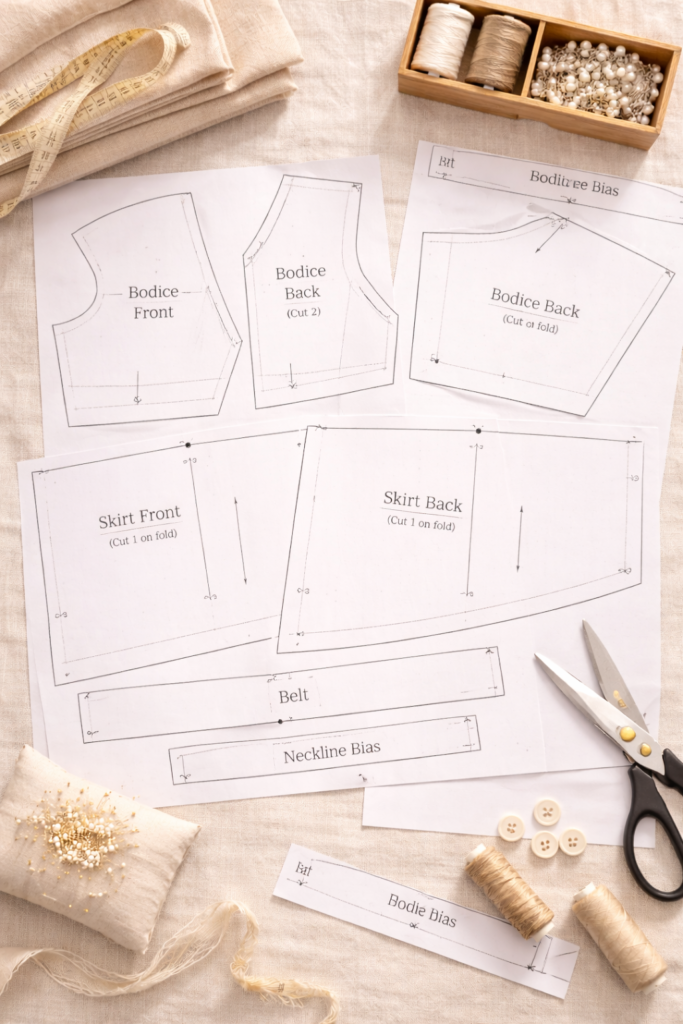
A sewing pattern is your blueprint. It shows you exactly how to turn fabric into a finished garment.
Most patterns include:
- Pattern pieces (the shapes you cut out)
- Step-by-step instructions
- Markings and symbols
- Fabric recommendations
Think of it like a roadmap: if you follow it correctly, you’ll get to your final result much faster and with fewer mistakes.
Understanding Pattern Pieces
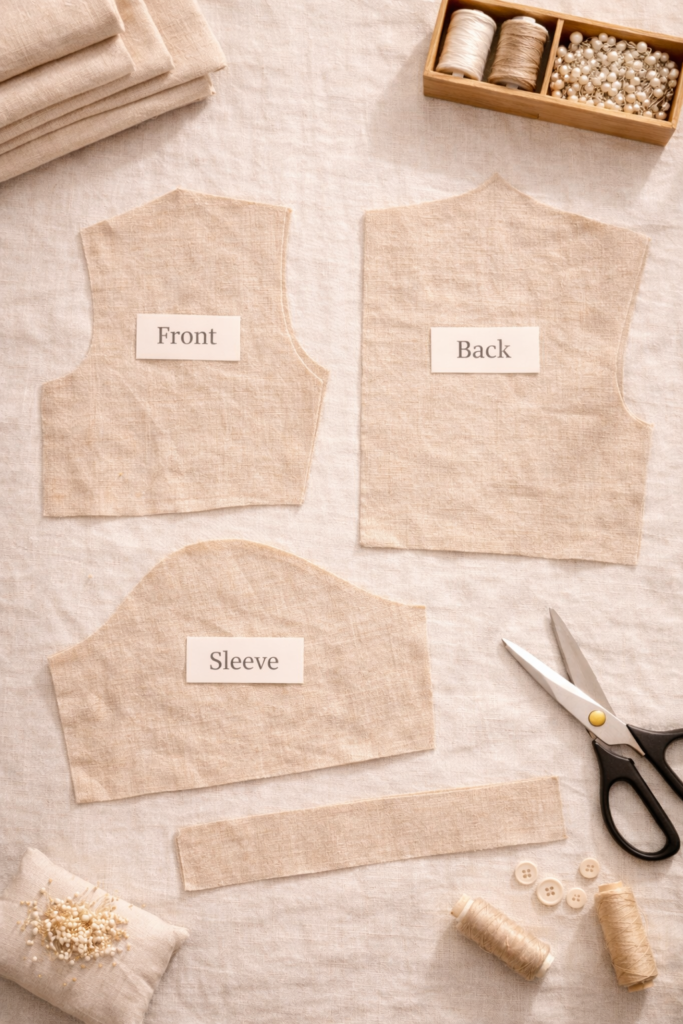
Each pattern piece represents a section of your garment.
- Front bodice
- Back bodice
- Sleeves
- Skirt panels
Pro Tip: Before cutting anything, take a moment to identify each piece and understand where it belongs.
Beginner Mistake: Cutting the wrong size or forgetting to cut mirrored pieces. Always check if the pattern says “cut 2” or “cut on fold.”
Understanding “Cut on Fold”
This is one of the most common areas beginners get confused.
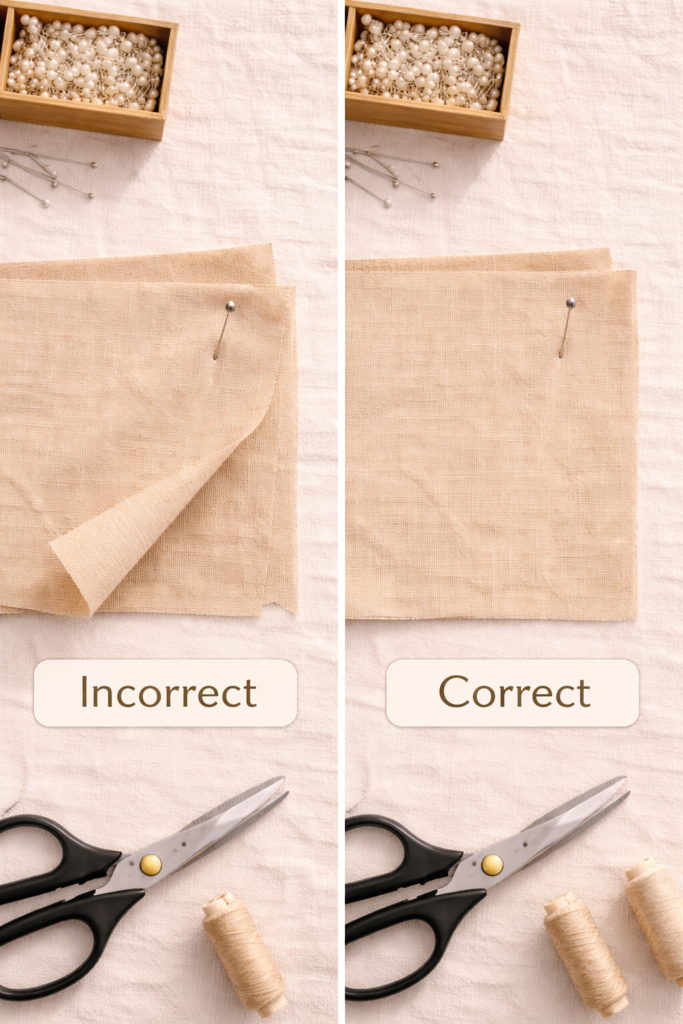
When a pattern says “cut on fold”, it means:
- You fold your fabric in half
- You place the pattern edge along the fold
- You cut around the rest of the piece
This creates a perfectly symmetrical piece when unfolded.
Tip: Always align the fold edge precisely—misalignment can distort your entire garment.
Key Pattern Symbols You Must Know
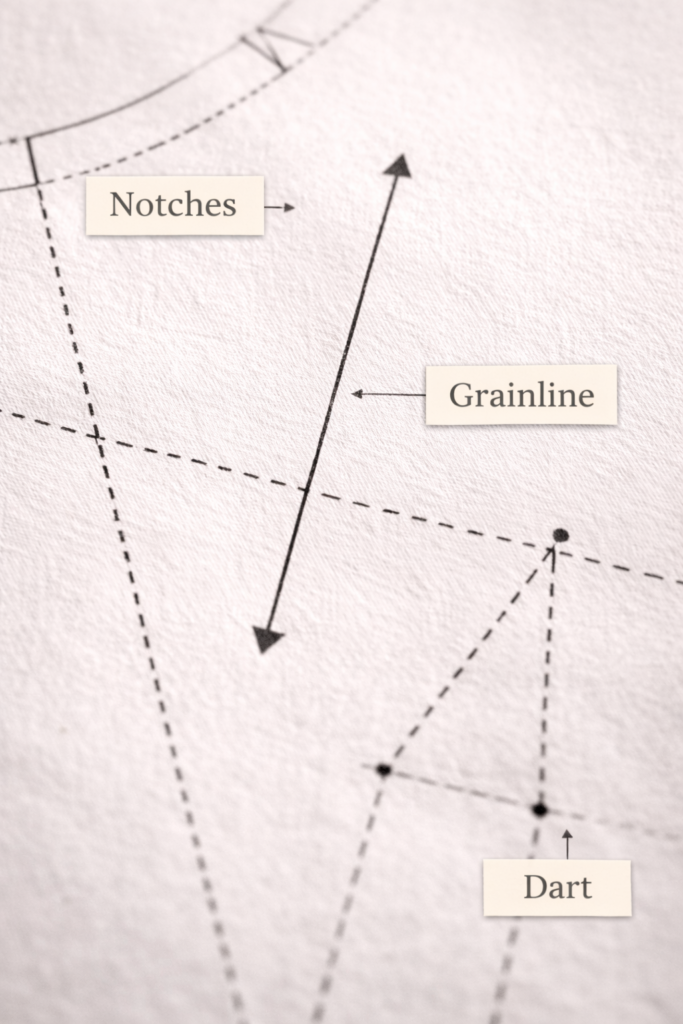
These markings may look small, but they are extremely important.
- Grainline: shows how to align fabric for proper drape
- Notches: small marks that help match pieces together
- Darts: folds that shape the garment to your body
- Fold Line: indicates where fabric should be folded
Pro Tip: Transfer markings to your fabric using chalk or pins. Skipping this step can make sewing much harder later.
How to Choose the Right Size
Sewing sizes are different from store sizes.
Instead of guessing, always:
- Measure your bust, waist, and hips
- Compare your measurements to the pattern chart
- Select based on measurements—not assumptions
Tip: If you’re between sizes, choose the larger one. It’s easier to take fabric in than let it out.
Reading the Instructions (The Right Way)
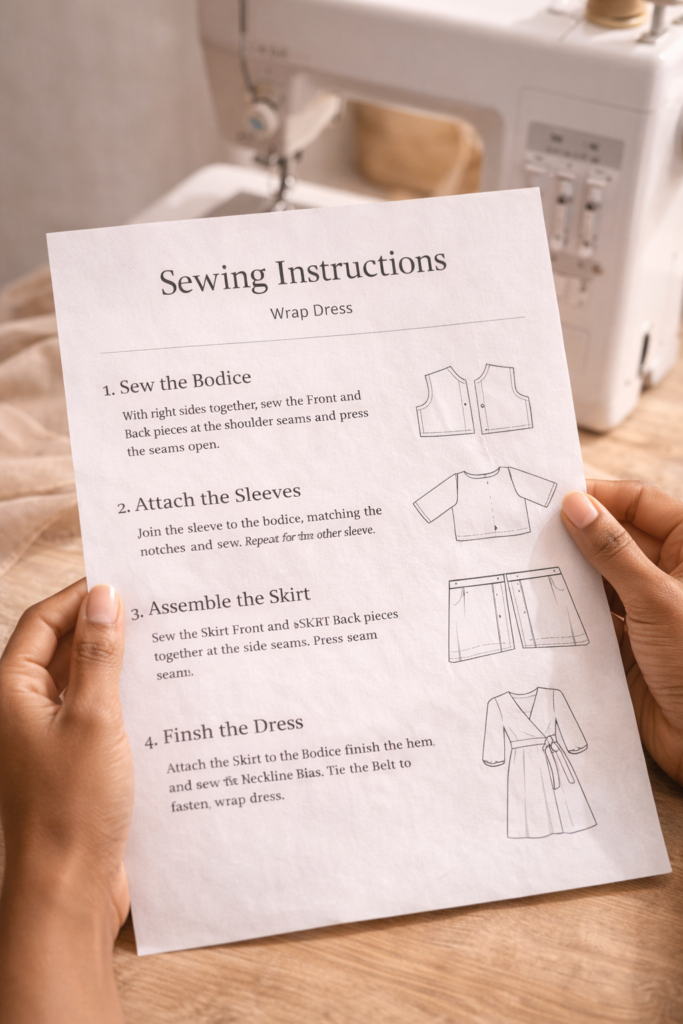
Instructions are often skipped—but they are one of your most valuable tools.
- Read the entire pattern before starting
- Understand the sequence of steps
- Take note of unfamiliar terms
Pro Tip: Read once before cutting, then again before sewing. This prevents costly mistakes.
Tools That Make Pattern Reading Easier
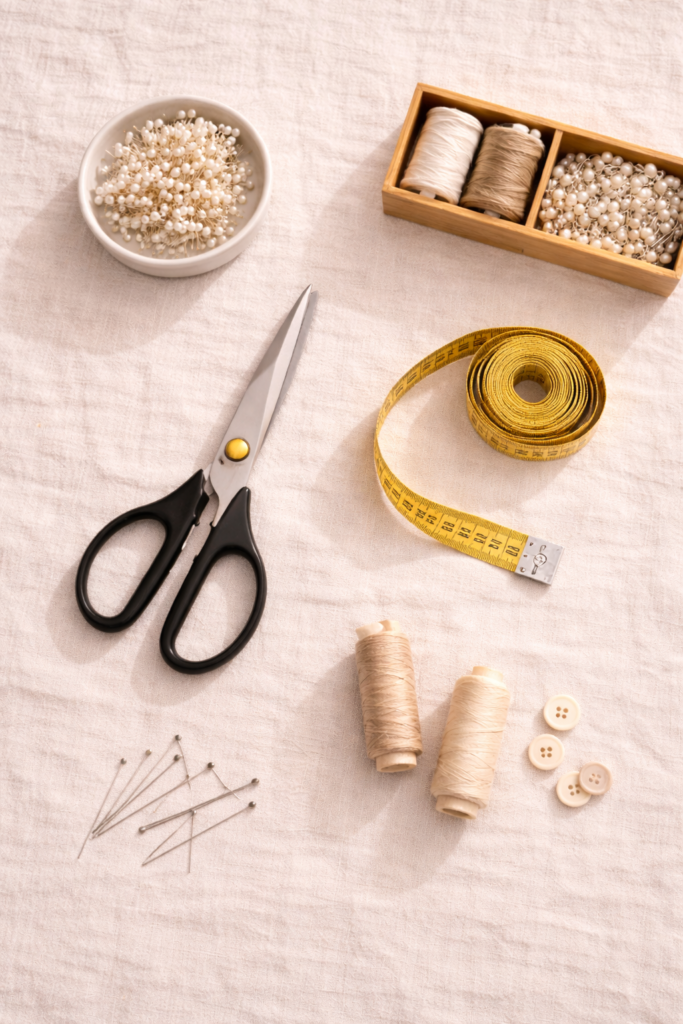
Having the right tools simplifies the process dramatically.
- Measuring tape for accuracy
- Sharp fabric scissors for clean cuts
- Pins to keep pieces aligned
👉 Get essentials here: Shop dressmaking kit
Common Beginner Mistakes (And Fixes)
Skipping measurements
Fix: Always measure before choosing a size.
Ignoring grainline
Fix: Align fabric correctly to avoid twisting or distortion.
Cutting too quickly
Fix: Slow down and double-check placement before cutting.
Not marking fabric
Fix: Transfer notches and darts to guide your sewing.
Pro Tips That Instantly Improve Your Results
- Use pattern weights instead of holding pieces by hand
- Cut on a flat, stable surface
- Keep pattern pieces organized as you work
- Label pieces after cutting to avoid confusion
- Always double-check before sewing each step
These habits create cleaner, more professional results.
Building Confidence with Patterns
At first, patterns may feel like a lot—but with each project, they become easier to understand.
The key is consistency. The more you practice, the more natural it becomes.
Start simple, take your time, and trust your progress.
Final Thoughts
Reading a sewing pattern is a skill—and like any skill, it improves with practice.
Once you understand how patterns work, you unlock the ability to create your own garments with confidence and intention.
Take your time, follow each step carefully, and enjoy the process.
Affiliate Disclosure: This post may contain affiliate links. If you purchase through these links, we may earn a small commission at no extra cost to you.
Leave a Reply