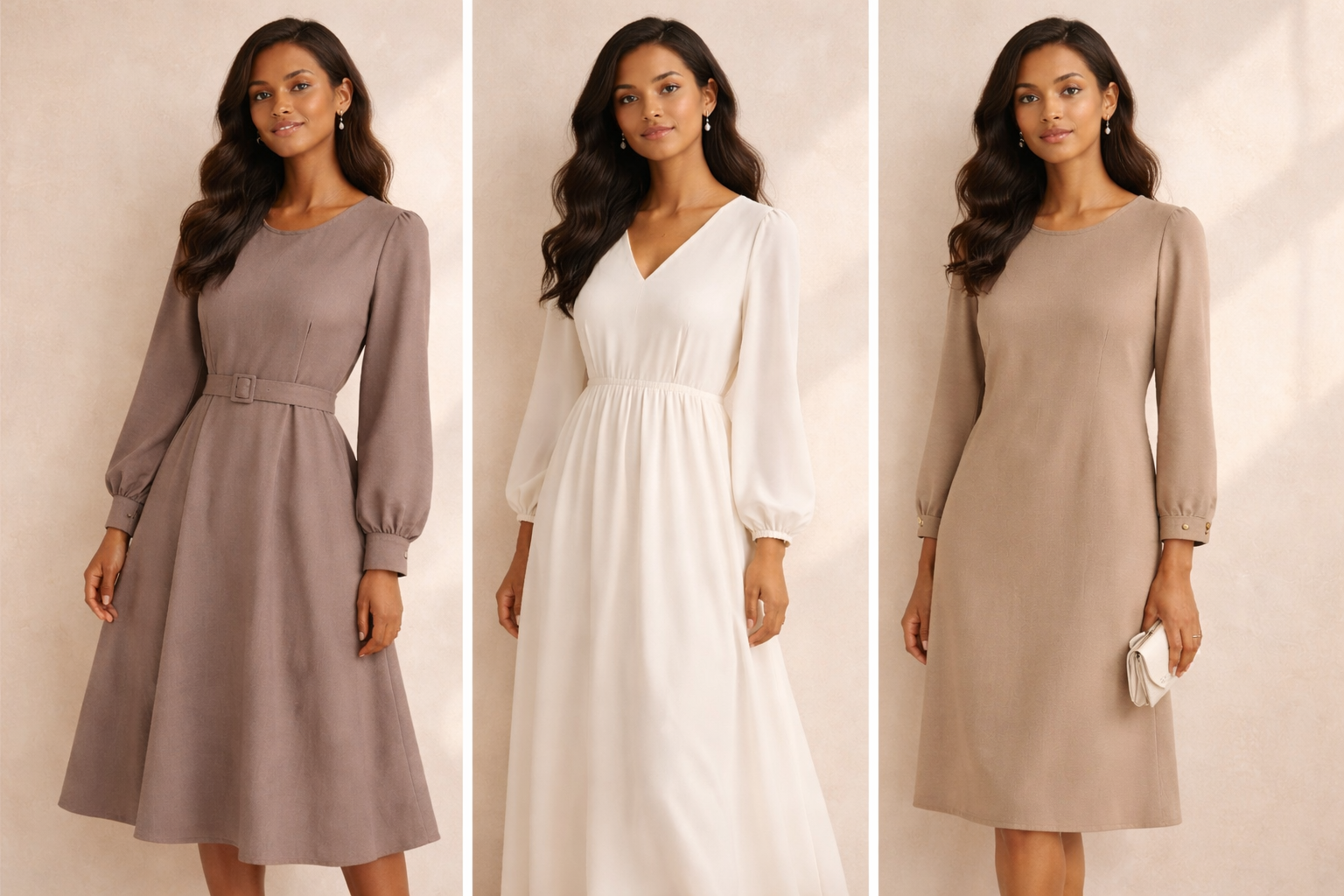
If you’ve ever sewn a dress and thought, “Why doesn’t this look high-end?” — you’re not alone. The truth is, it’s rarely about skill level. It’s about pattern selection, structure, and finishing strategy.
This guide is designed to help you start smart, choosing beginner-friendly modest dress patterns that look elevated, photograph beautifully, and can even support a monetized sewing workflow.
What Makes a Dress Look Expensive?
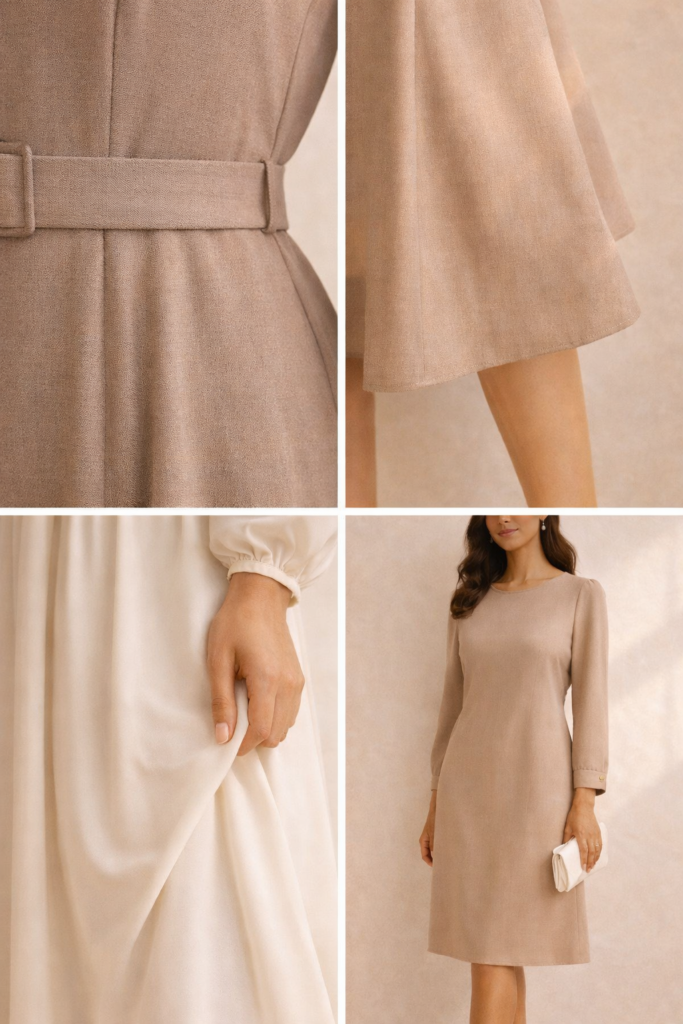
Before diving into patterns, let’s align on the key design signals that create a premium look:
- Clean silhouettes (A-line, sheath, empire waist)
- Longer hemlines (midi to maxi instantly elevates)
- Intentional seam placement (not overly complex, just strategic)
- Fabric drape (structure > flimsiness)
- Minimal clutter (less is more)
These are the exact principles behind every pattern below.
1. The Classic A-Line Midi Dress
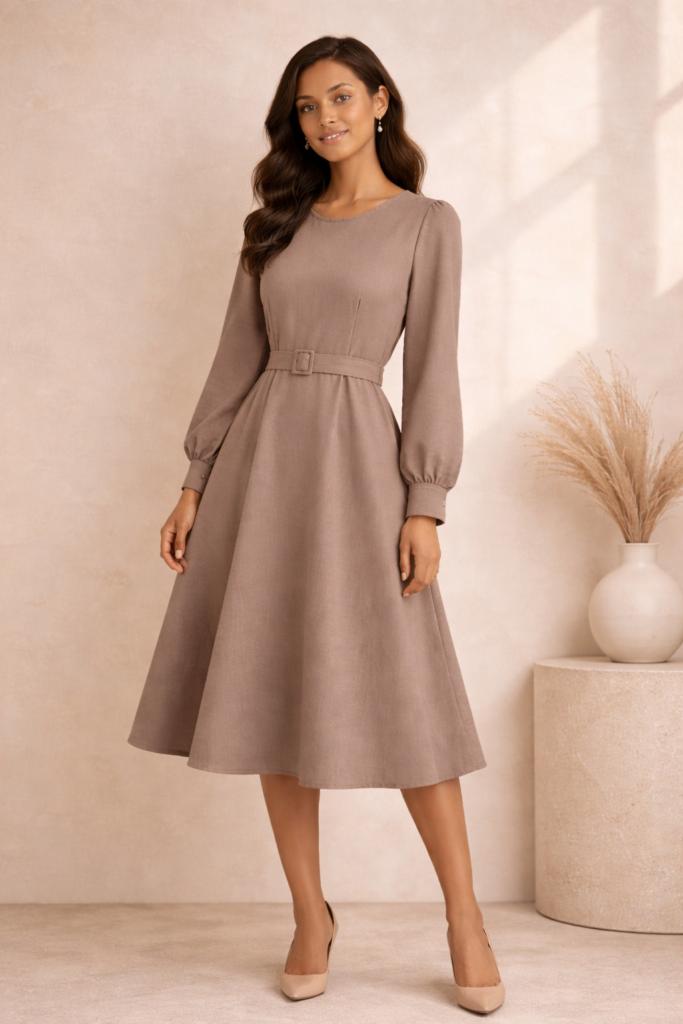
Why it looks expensive:
The A-line silhouette naturally creates balance and structure without requiring advanced tailoring.
Beginner win:
- No complicated shaping
- Forgiving fit
- Easy hemline control
Upgrade tip:
Use medium-weight fabrics like cotton twill or linen blends to hold shape.
2. The Empire Waist Maxi Dress
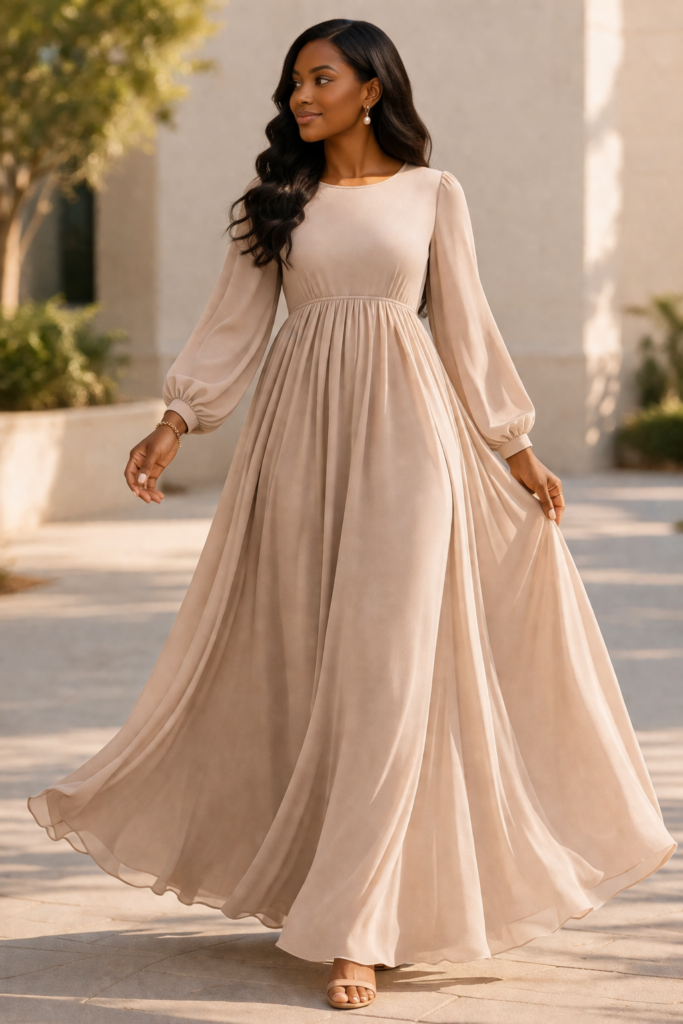
Why it looks expensive:
The raised waistline elongates the body and creates a soft, elegant drape.
Beginner win:
- Minimal fitting required
- Easy gathering technique
- Works across body types
Upgrade tip:
Choose fabrics with movement (rayon, soft crepe) for that luxury flow.
3. The Structured Shift Dress
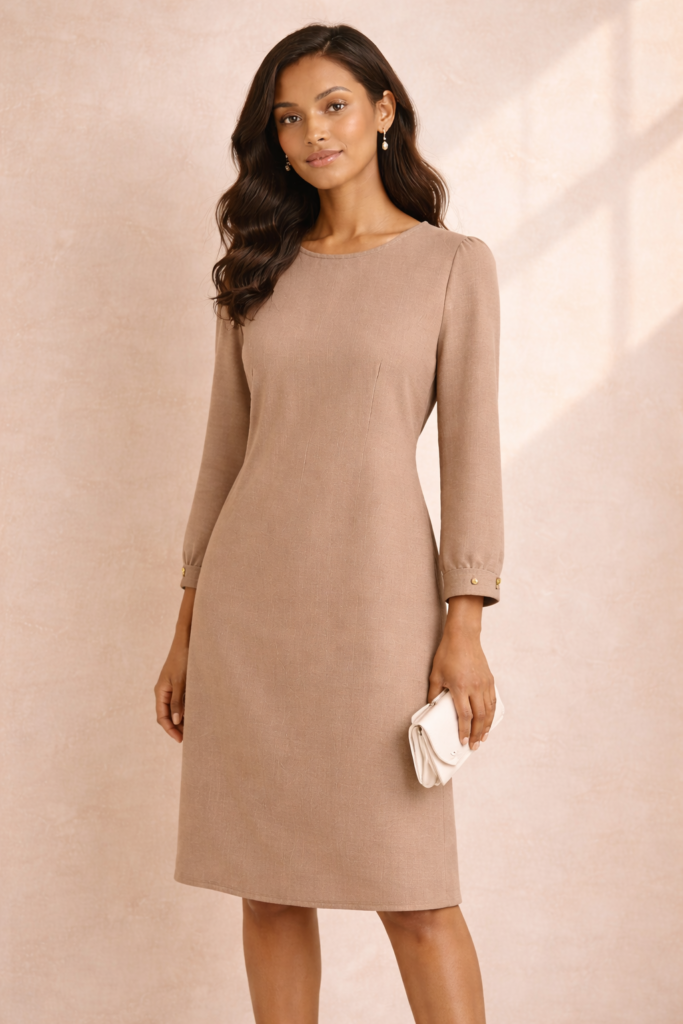
Why it looks expensive:
Clean lines + minimal seams = designer-level simplicity.
Beginner win:
- Straight seams
- No waist shaping required
- Quick construction
Upgrade tip:
Focus on perfect pressing — this is what makes or breaks this look.
4. The Wrap-Style (Modest Adapted) Dress
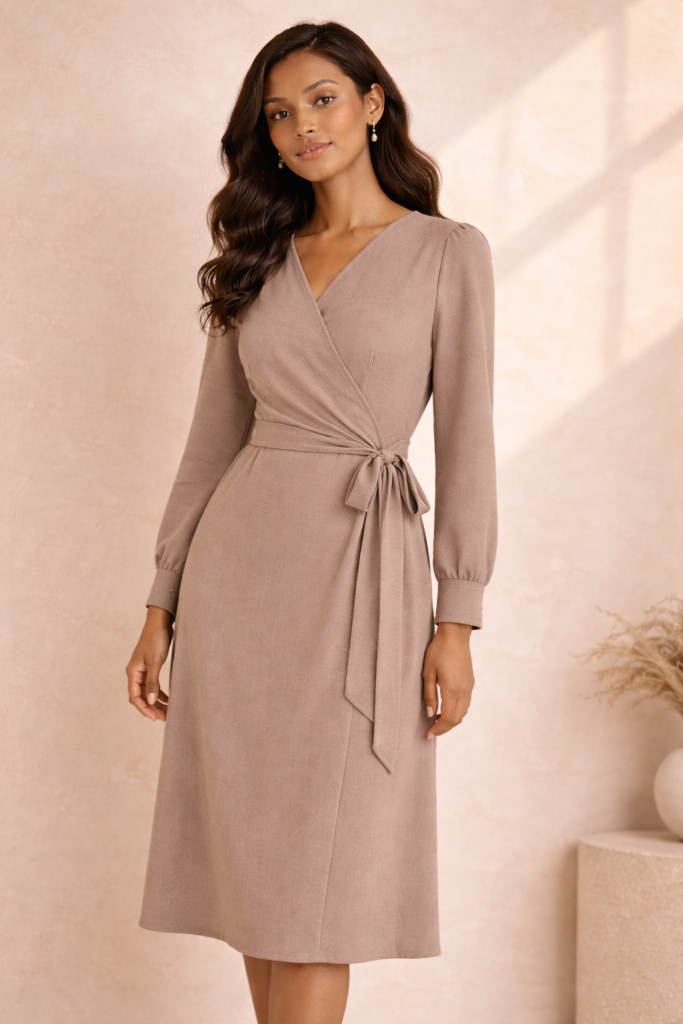
Why it looks expensive:
Wrap styling creates natural tailoring and adjustability.
Beginner win:
- Adjustable fit
- No zipper required
- Flattering on all body types
Upgrade tip:
Modify with a sewn-in panel for full modest coverage.
5. The Tiered Midi Dress
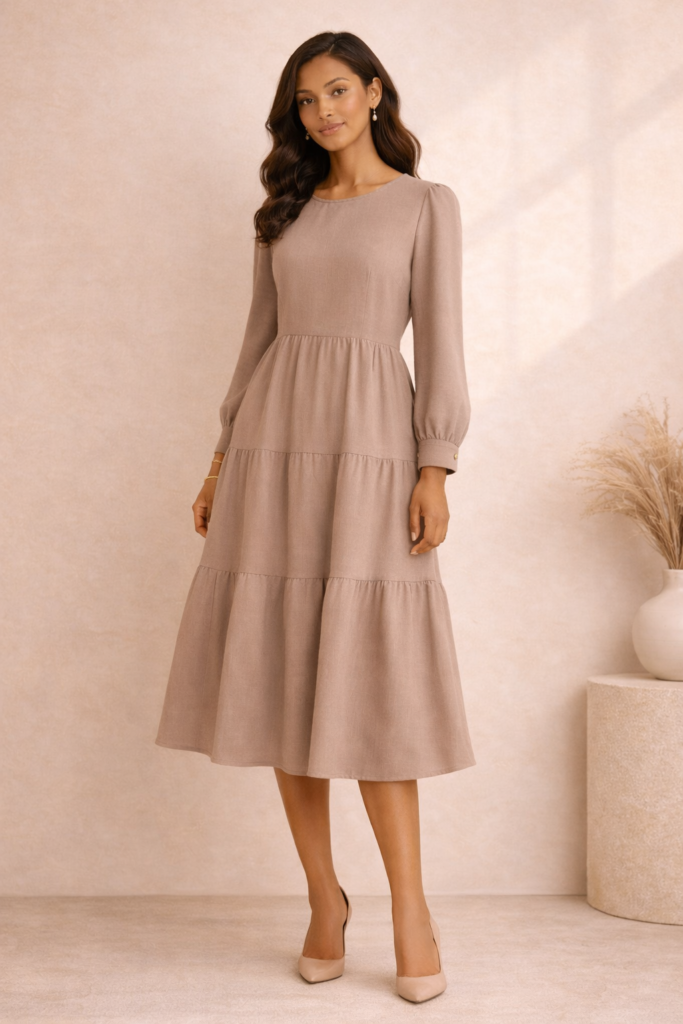
Why it looks expensive:
Layering adds dimension without complexity.
Beginner win:
- Repetitive construction (easy to learn)
- No advanced fitting
- Great for lightweight fabrics
Upgrade tip:
Keep tiers subtle — oversized tiers can look bulky instead of elevated.
6. The Button-Front Shirt Dress
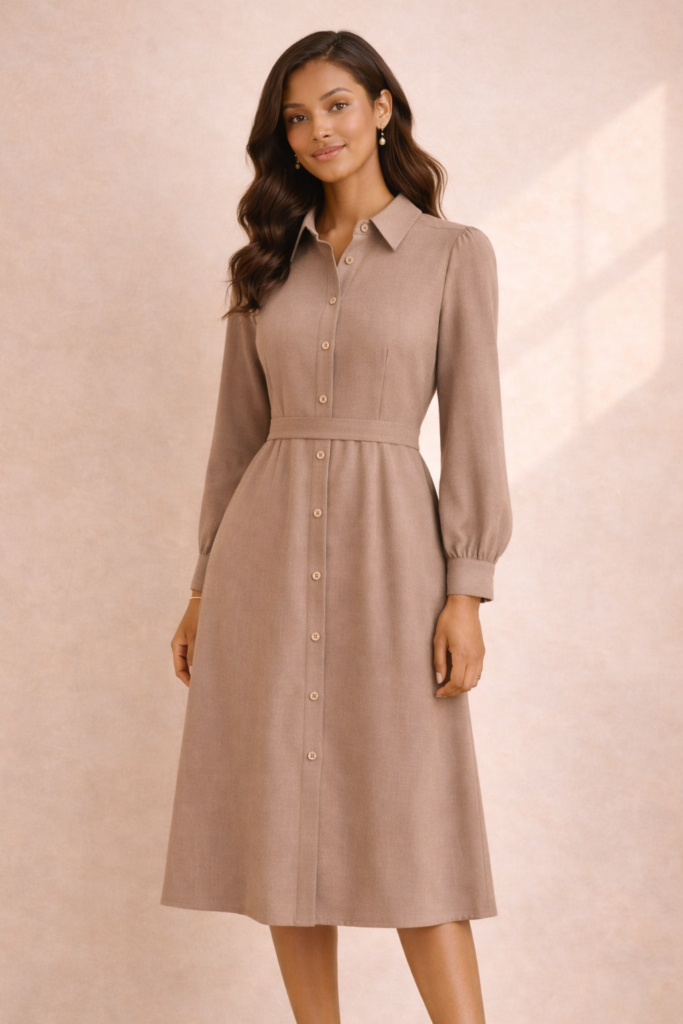
Why it looks expensive:
It mimics ready-to-wear tailoring.
Beginner win (modified version):
- Skip collar complexity (use a band collar)
- Straight seams dominate construction
Upgrade tip:
Use contrast buttons for a polished, intentional finish.
7. The Elastic Waist Maxi Dress
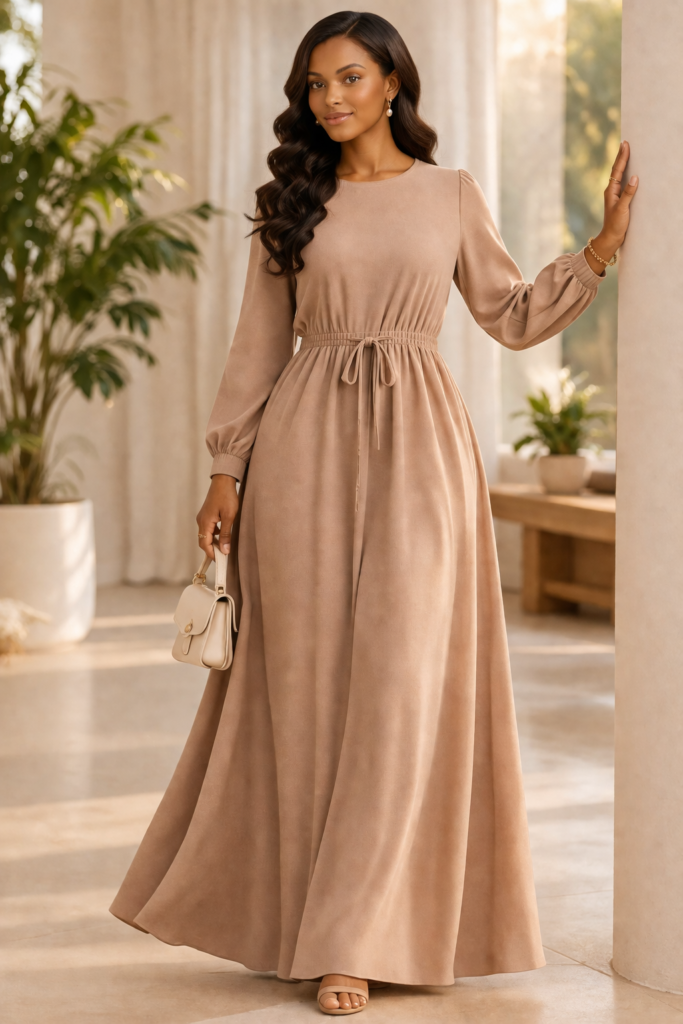
Why it looks expensive:
Soft structure + defined waist = effortless polish.
Beginner win:
- No zipper
- Simple waistband construction
- Comfortable and wearable
Upgrade tip:
Use hidden elastic (encased) instead of exposed bands.
8. The Paneled Dress (Vertical Seams)
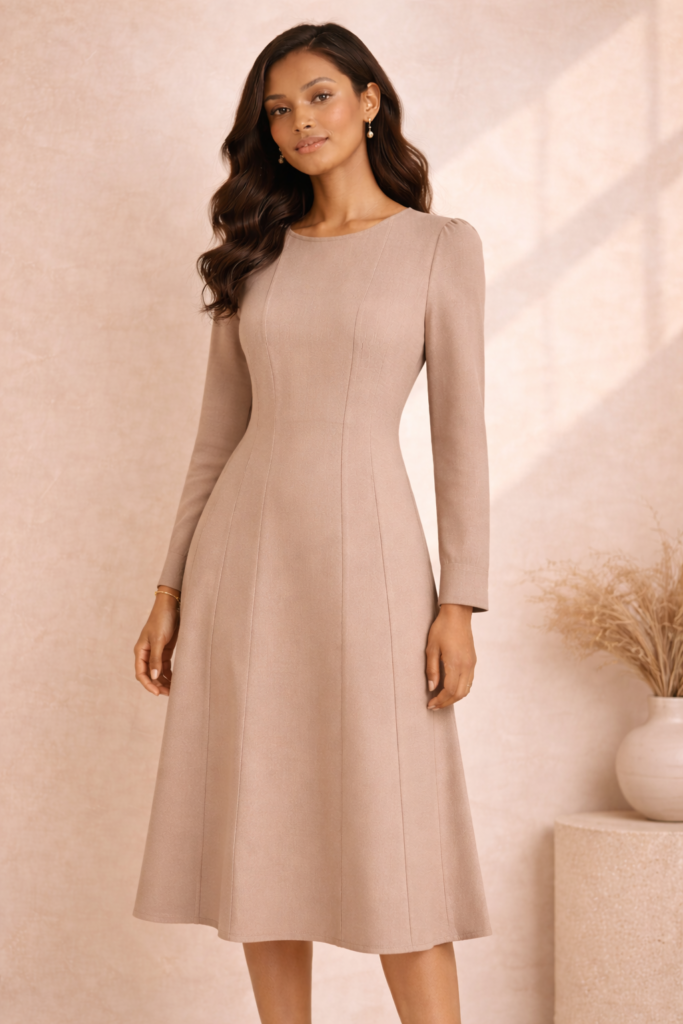
Why it looks expensive:
Vertical seams create a tailored, elongating effect.
Beginner win:
- Straight seams
- No darts required (in many versions)
Upgrade tip:
Use contrasting panels subtly for a designer feel.
9. The High-Neck Minimalist Dress
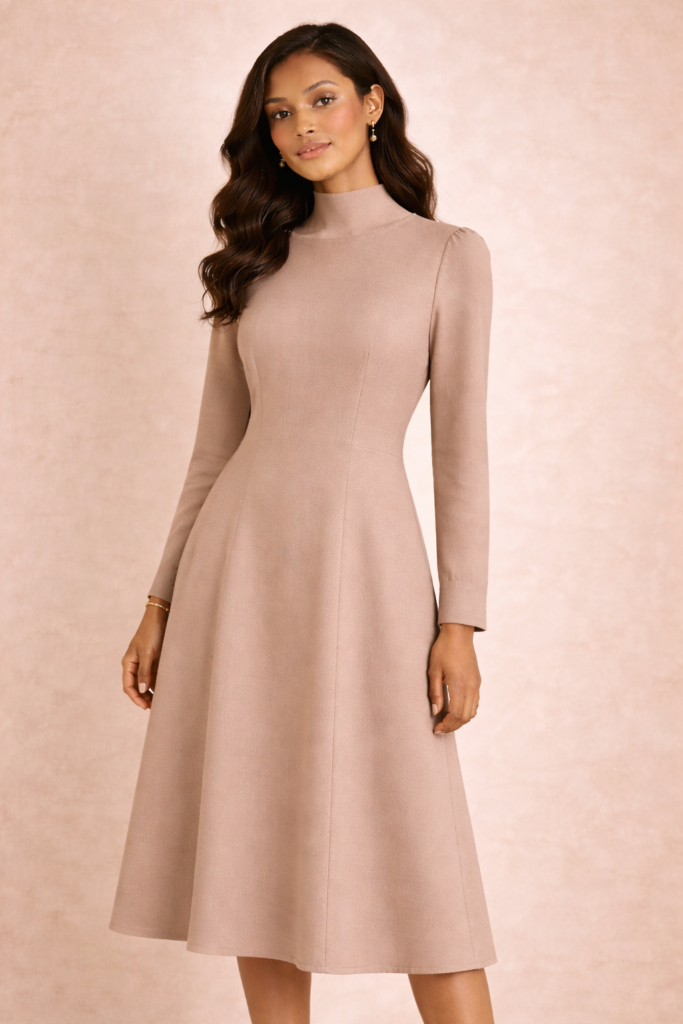
Why it looks expensive:
High necklines instantly communicate sophistication.
Beginner win:
- Simple bodice
- Clean finish techniques
Upgrade tip:
Stabilize the neckline properly to avoid stretching.
10. The Straight Maxi Column Dress
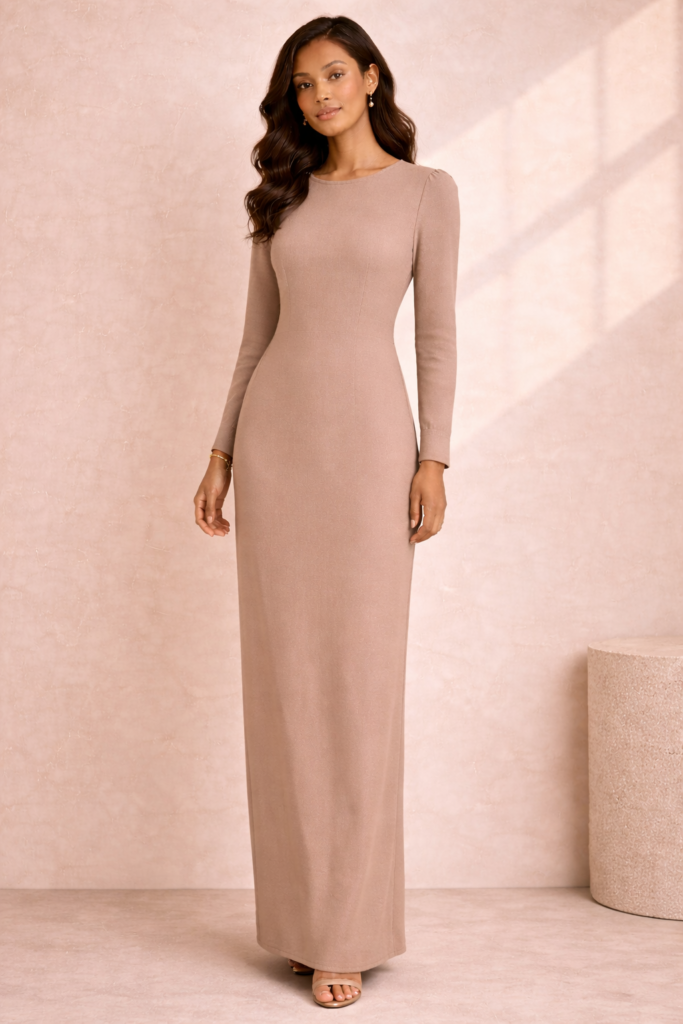
Why it looks expensive:
This is the ultimate minimalist statement.
Beginner win:
- Straight seams only
- No shaping required
Upgrade tip:
Add a back slit for movement while keeping the silhouette clean.
Fabric Matters More Than You Think
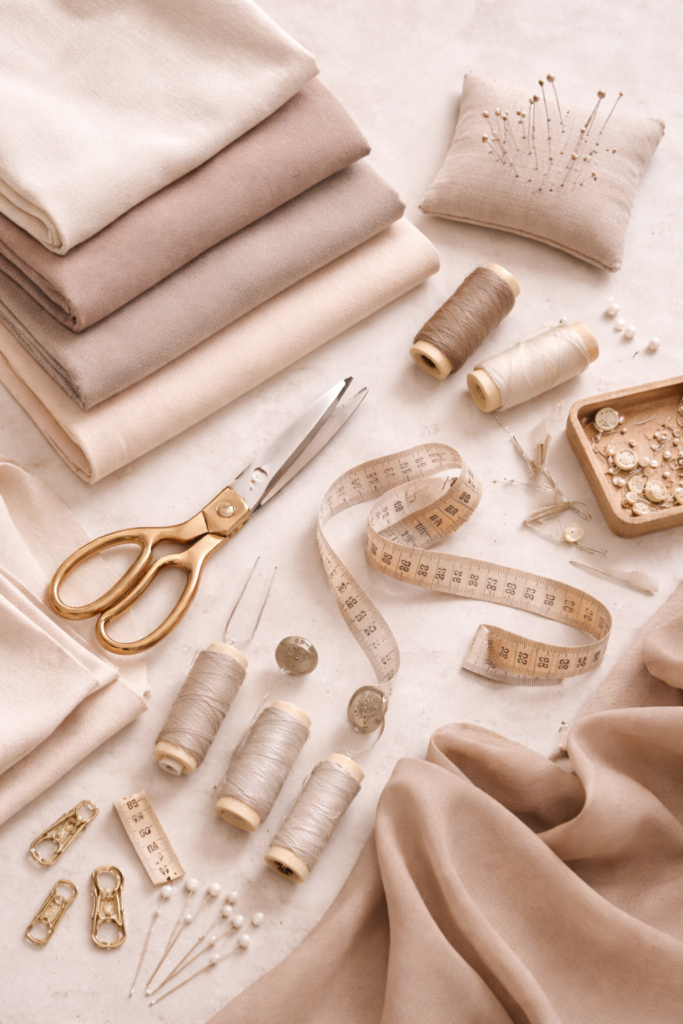
Choosing the right fabric can elevate even the simplest pattern. Retailers like Mood Fabrics and Joann offer beginner-friendly options that still give a high-end finish.
Look for:
- Medium weight (not flimsy)
- Matte finishes (less shine = more expensive look)
- Soft structure (holds shape but moves naturally)
Common Beginner Mistakes That Make Dresses Look Cheap
Avoid these if you want your dress to look polished:
- Skipping pressing between steps
- Using fabric that’s too thin
- Uneven hems
- Rushing seam finishes
- Overcomplicating the design
Final Takeaway
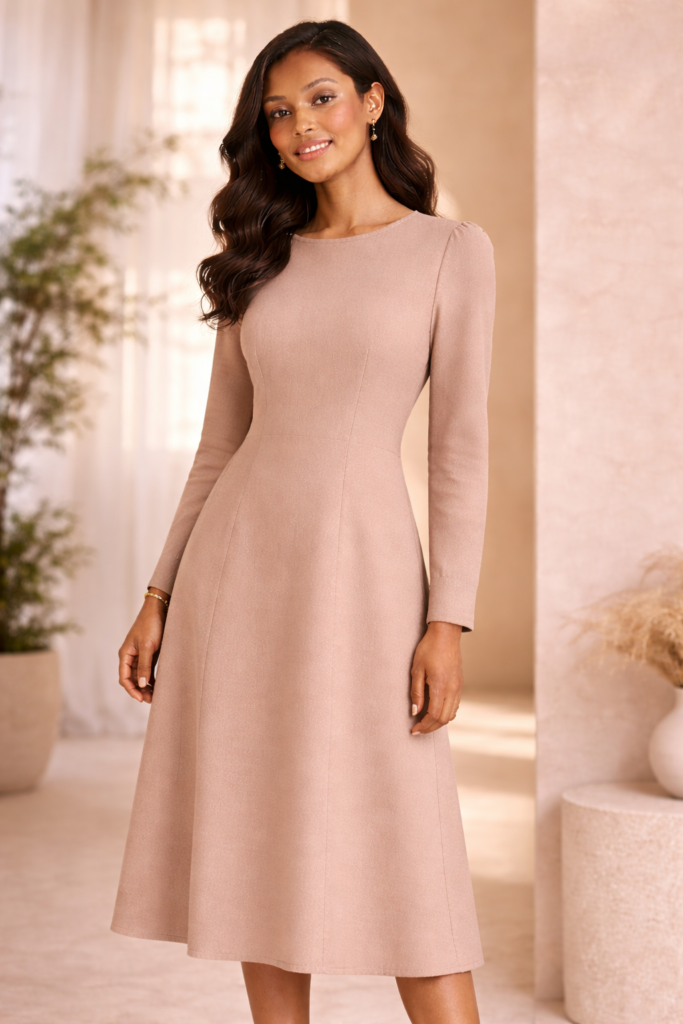
You don’t need advanced skills to create a dress that looks expensive — you need the right pattern, the right fabric, and intentional finishing.
Start with one of the patterns above, focus on clean execution, and you’ll not only improve your sewing — you’ll create pieces that look like they came straight from a boutique.
Next Step
If you’re ready to take this further, your next move is building a signature piece you can style multiple ways. That’s where your content — and your monetization — really starts to scale.